

This raises an important question: if marketing is active, why are results still unpredictable?
The answer often lies in how success is measured. Metrics like traffic and engagement show activity, but not actual patient conversions. Without structured healthcare analytics, marketing stays reactive instead of driving real growth.
This article will help you understand what truly drives patient conversions and how to build a system that delivers consistent, measurable growth.
The Real Cost of Healthcare Marketing Today
Healthcare marketing costs do not depend on just one factor. They are influenced by multiple elements such as your clinic’s size, location, competition, growth goals, and the type of services you offer. What works for a small practice may not work for a multi-specialty centre. Similarly, a clinic in a competitive city market will naturally need a higher investment than one in a smaller town.
In simple terms, healthcare marketing is a combination of several ongoing investments that work together to generate patient enquiries and appointments.
Most clinics distribute their marketing budget across the following areas:
- Advertisements: Google Ads, social media promotions, and local campaigns to generate leads
- Agency Fees: Payments to marketing partners for strategy, execution, and optimisation
- Tools & Software: CRM systems, automation platforms, reporting tools, and communication software
- Staff Time: Team members handling calls, follow-ups, appointment scheduling, and patient coordination
While these visible costs are easy to track, many clinics overlook the hidden expenses that silently reduce their returns.
This is why “cheap marketing” often becomes expensive in the long run. Low-cost agencies, incomplete systems, or poorly managed campaigns may seem budget-friendly at first. However, without proper tracking, automation, and optimisation, they lead to wasted ad spend, poor conversion rates, and repeated re-investment to fix the same problems.
In today’s market, most healthcare organisations invest anywhere between ₹10,000 to ₹20,000+ per month, and many growing practices spend even more. The real question is how effectively that investment is converting into real patients and sustainable revenue.

Why Most Clinics Don’t See Results from Marketing
Most healthcare clinics today are actively investing in digital marketing. On the surface, it often looks like marketing is doing its job. Yet, despite all this activity, many clinics still struggle to see a steady increase in actual patient visits.
This happens because generating interest is only the first step. The real challenge lies in converting that interest into confirmed appointments and walk-in consultations. When this conversion process is weak, even the best marketing campaigns fail to deliver meaningful results.
In most cases, the issue is not a lack of leads. It is what happens after the lead is generated.
This gap is known as marketing leakage.
Marketing leakage occurs when patient enquiries are lost, delayed, poorly managed, or forgotten at different stages of the patient journey. Instead of moving smoothly from enquiry to appointment, many potential patients drop out midway and choose another healthcare provider.
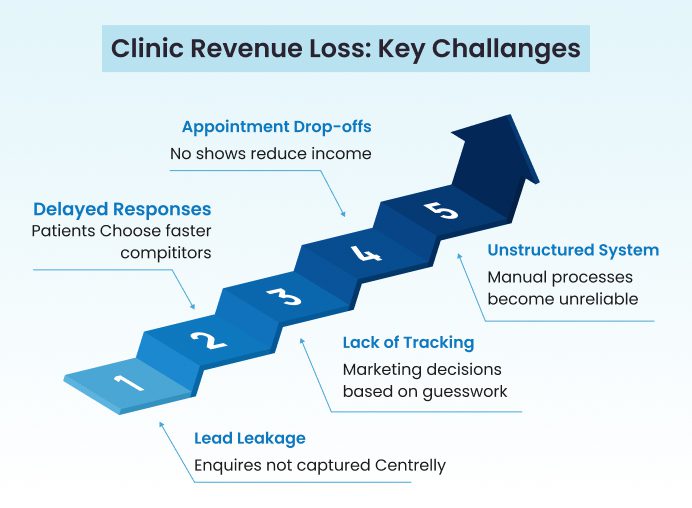
Individually, these gaps may seem small and manageable. But together, they create a continuous drain on your marketing investment. Over time, clinics end up spending more on ads and promotions in an attempt to increase leads.
To achieve consistent and sustainable results, clinics must first identify and close these marketing leaks. Only when the system is strong can marketing efforts truly translate into real patient visits and long-term revenue.
What ROI Really Means in Healthcare Marketing
When it comes to healthcare marketing, many doctors and clinic owners hear terms like “ROI,” “performance,” and “returns” very often. However, in practical terms, ROI does not need to be complicated or technical.
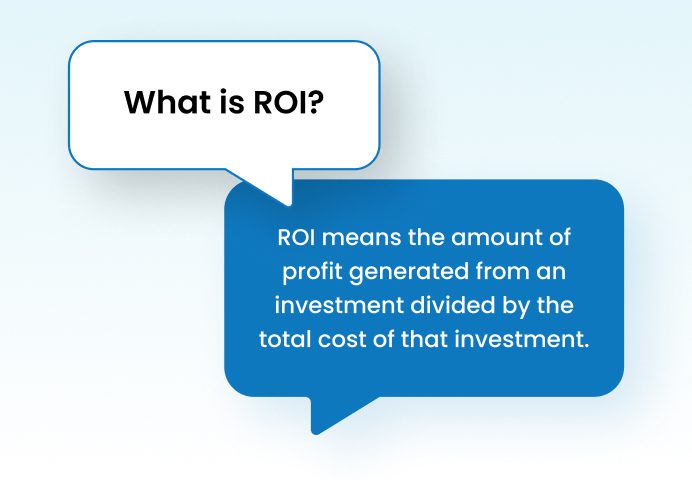
For example, if you are spending ₹20,000 on marketing and earning ₹2,00,000 from the patients generated through it, your investment is working well. If you are spending ₹20,000 and earning only ₹30,000 or ₹40,000, then something needs improvement.
To understand this clearly, there are three basic numbers every healthcare practice should know:
- Cost Per Patient: This shows how much money you are spending to acquire one patient through marketing. If this cost is too high, it means your system is not converting enquiries efficiently.
- Revenue Per Patient: This tells you how much income you generate, on average, from each patient visit. It helps you understand the real value of every consultation.
- Monthly Profit from Marketing: This is the amount left after subtracting your marketing cost from the revenue it generates. This number shows whether your investment is helping your clinic grow or creating financial pressure.
You do not need any marketing background to understand these numbers. They are directly connected to your clinic’s daily operations and financial health.

Understanding Your Results: What Do They Mean?
After using the calculator, you will see three important numbers:
- Your cost per patient
- Your ROI percentage
- And your estimated revenue loss.
These results reflect how well your current marketing and internal systems are working together.
Every clinic’s results will be different based on location, speciality, competition, and patient volume. However, what matters most is not whether your numbers are “high” or “low” compared to others, but what they reveal about your own operations.
Let’s look at what each result means for your clinic.
When Your Cost Per Patient Is High
If your cost per patient is high, it means you are spending a lot of money to acquire each patient. This usually happens because your internal system is not converting enquiries properly.
Common reasons include delayed responses, missed calls, poor enquiry handling, and lack of follow-ups. Even when patients show interest, they are not guided smoothly towards booking and visiting.
In simple terms, your marketing is bringing attention, but your system is failing to convert it into appointments.
When Your ROI Is Low
If your ROI percentage is low, it means the revenue generated from marketing is not much higher than the amount you are spending. In some cases, it may even be close to break-even.
This often indicates weak follow-up practices.
Patients may enquire but do not receive timely reminders, confirmation messages, or personalised communication. Without consistent engagement, their interest fades, and they choose another provider.
Low ROI is rarely about poor advertisements. It is usually about inconsistent communication and weak patient nurturing.
When Your Revenue Loss Is High
If your estimated revenue loss is high, it means many potential patients are slipping away before they ever reach your consultation room. This is a clear sign of process gaps.
These gaps may include untracked leads, a lack of centralised data, no reminder systems, manual scheduling errors, or unclear staff responsibilities.
When processes are not structured, even motivated patients fall through the cracks. Over time, this leads to empty appointment slots, underutilised staff, and unstable revenue.
When you look at your results together, they provide a complete picture of your clinic’s growth health:
- A high cost per patient shows conversion inefficiency
- A low ROI highlights weak engagement and follow-ups
- A high revenue loss exposes operational gaps
Most importantly, these issues are fixable.
They do not require you to spend more on advertising. They require better systems, structured workflows, and data-driven management.
Where Most Clinics Lose Money Every Month
For most healthcare clinics, revenue loss happens quietly, every day, through small gaps in systems and processes that often go unnoticed, and this is because money is being lost in places that are rarely monitored.
Let’s now have a look at the major sectors where most clinics lose their marketing spend.
Missed calls and unanswered enquiries
During busy hours, phone calls go unanswered. WhatsApp messages remain unread. Website forms are not checked on time. Each missed enquiry represents a patient who was actively looking for care and did not receive a response. Most of them never try again.
Lack of reminders and confirmations
Patients often forget appointments, get confused about timings, or lose motivation to visit. Without automated reminders through calls, messages, or emails, no-shows become common. Every empty slot is lost revenue that can never be recovered.
Operating without a proper CRM
Enquiries are scattered across notebooks, phones, spreadsheets, and different staff members. When information is fragmented, follow-ups become inconsistent and unreliable. Important details are missed, and patient relationships weaken over time.
Manual tracking
Relying on memory, handwritten notes, or basic registers may work when volumes are low. But as patient numbers grow, errors multiply. Leads are forgotten. Appointments are mixed up. Follow-ups are delayed. What starts as a simple process becomes a major operational burden.
Lack of clear reporting
Without regular performance reports, clinics do not know what is working and what is failing. There is no visibility into lead sources, conversion rates, or revenue impact. Decisions are made based on assumptions instead of facts, leading to repeated mistakes and wasted budgets.
Together, these gaps create a continuous drain on your growth, and over time, the financial impact becomes significant.
This is why it is important to understand one simple truth: Marketing isn’t failing. Systems are.
Until these internal gaps are fixed, increasing ad spend or changing agencies will only increase losses. The real opportunity lies in building strong, reliable systems that protect every enquiry, every appointment, and every patient relationship, month after month.
How MedGrowthEngine.ai Fixes These Gaps
Most clinics do not need more advertisements. They need better systems that protect every enquiry and convert interest into real patient visits. This is exactly where MedGrowthEngine.ai plays a critical role.
Instead of focusing only on promotions, we work on strengthening the entire patient acquisition and conversion process, so that no opportunity is wasted.
This is how the gaps are systematically fixed.
Centralised Lead Tracking
All patient enquiries from calls, WhatsApp, website forms, and advertisements are captured in one secure system. This ensures that no lead is missed, forgotten, or ignored. Every enquiry remains visible, monitored, and properly followed up—reducing lead loss and improving conversions.
Automation & Structured Follow-Ups
Patients receive timely responses, appointment confirmations, reminders, and follow-up messages automatically. This reduces dependency on manual effort and ensures consistent communication. As a result, response times improve, appointment drop-offs reduce, and patient engagement increases.
Integrated CRM Management
A strong CRM system helps clinics maintain complete patient records, track interactions, and manage appointments efficiently. Instead of scattered data and handwritten notes, everything is organised in one place—making daily operations smoother and more reliable.
Performance Dashboards & Reporting
Clear dashboards provide real-time insights into leads, appointments, conversions, and revenue impact. Clinic owners and managers can easily identify what is working and where improvements are needed—without relying on guesswork or assumptions.
Compliance & Data Security
Patient information is handled through industry-aligned and secure processes. This ensures responsible data management, protects the clinic’s reputation, and builds long-term trust with patients.
Together, these systems help clinics move from fragmented processes to structured, predictable growth, turning marketing investment into consistent patient acquisition and sustainable revenue.