





Jun 05/2026
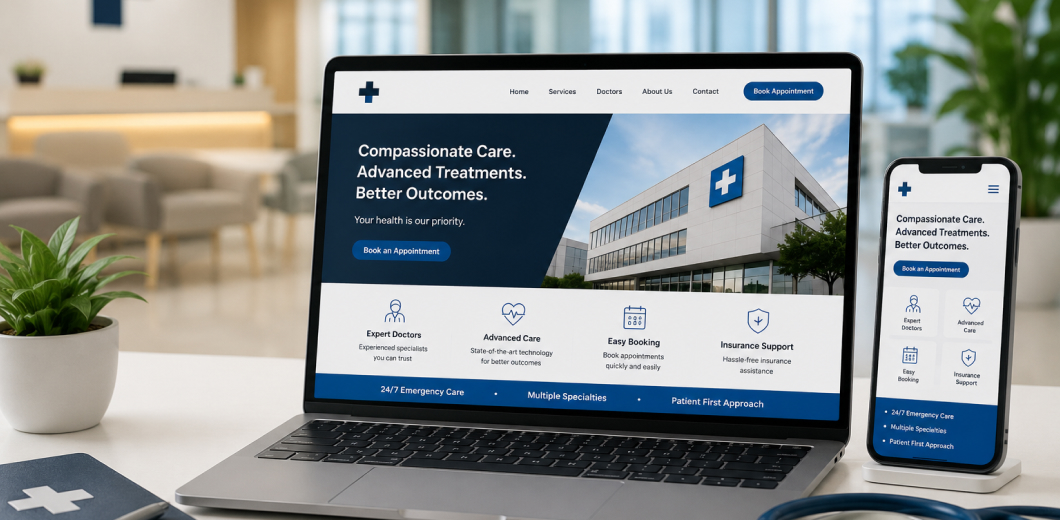
The way patients choose hospitals has changed significantly. In India, this shift is even more pronounced, with over 739 million citizens now holding ABHA digital health IDs. Patients no longer rely only on proximity or recommendations; they prioritize online research, visibility, comparison, and, increasingly, digital accessibility.
The rise of mobile usage has accelerated this transformation. With 97% of Indian youth using smartphones as their primary health tool, your hospital’s website has become your first impression and a critical touchpoint. Website performance directly influences patient decisions. If it takes longer than three seconds to load, you risk losing more than half of your potential patients before they even engage with your services.
MedGrowthEngine.ai helps the healthcare industry by optimizing for high-speed mobile performance, easy location visibility, and seamless digital integration. It ensures your digital presence aligns with today’s expectations of Indian healthcare consumers.
In this blog, we will explore key elements that influence patient behavior and decision-making. Keep reading to understand how improving your hospital website can help you attract and convert more patients.
Understanding The Patient Conversion Journey
An overview of the patient conversion journey shows how individuals move from recognizing a health concern to choosing a provider. It highlights the key stages that influence decisions and ultimately lead to booking an appointment.
Awareness, Consideration, and Decision Stages
The patient journey usually has three steps. In the awareness step, patients notice a symptom and seek answers, asking questions such as “Why does my knee hurt?” to identify their problem.
In the consideration step, they review treatment options, compare them, and begin searching for the right doctors or nearby clinics.
In the decision step, patients are ready to pick a provider. They focus on doctors, reviews, insurance, and booking options, and their searches get very specific, like “cardiologist near me.”
Informational vs Transactional Intent
To capture patients at every step, a healthcare website needs to match two types of search goals. Informational intent occurs early, when users want to learn about symptoms, conditions, or treatments. Content like blogs, guides, and FAQs provides clear answers and builds trust.
Transactional Intent comes into play when patients are ready to take action, such as booking an appointment or contacting the hospital; this requires strong CTAs, clear contact details, and easy scheduling options. The key is to build trust first and then guide patients smoothly toward conversion.
Key Patient Touchpoints On A Website
A hospital website’s performance affects the patient’s decision of whether they book or leave. The homepage should clearly show who you are and guide visitors. Provider bios build trust by showing expertise. Service pages should explain treatments in simple words to inform and comfort patients. Reviews provide social proof, and easy scheduling or contact options encourage action. Clear insurance and patient information make it easier for patients to choose your hospital.
Every Patient interaction Should Drive Action
Discover The SolutionDefining a Clear Value Proposition
In a crowded healthcare market, a value proposition is your hospital’s most important messaging tool. A strong value proposition moves beyond generic claims of “quality care” and focuses on tangible, distinct advantages.
Here is how to build and communicate a compelling value proposition that resonates with patients.
What Makes Your Hospital Different
To define your value proposition, you first have to identify your true differentiators. Patients have choices, and your messaging must answer the fundamental question: Why should they choose you?
- Identify specific strengths, such as advanced technology, specialized care, a convenient location, or shorter wait times.
- Focus on what truly sets your hospital apart and avoid clichés like “compassionate care” or “state-of-the-art.”
- Focusing on patient experience, like streamlined admissions, patient navigators, and strong follow-up care, can set your hospital apart.
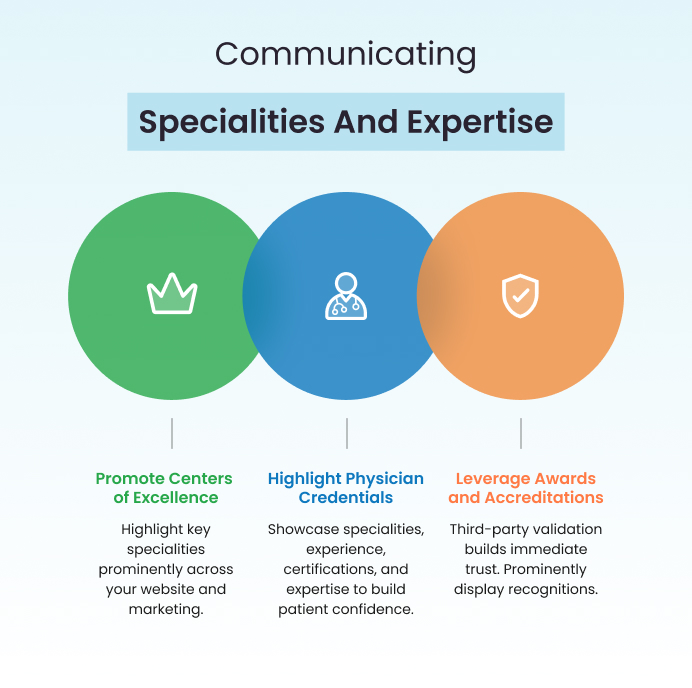
Communicating Specialties And Expertise
Having world-class talent and highly specialized departments is only an advantage if patients actually know about them. Communicating your expertise requires translating dense clinical language into accessible, patient-centric messaging.
- Highlight key specialties such as orthopedics, cardiology, and oncology prominently across your website and marketing.
- Showcase specialists’ experience, certifications, and expertise to build patient confidence.
- Prominently display recognitions from reputable organizations like The Joint Commission or specialized medical boards.
Highlighting Outcomes And Patient Benefits
Patients do not just seek medical services; they seek a return to health. They want to know they will get better, recover faster, and return to their normal lives. Your value proposition must connect your clinical capabilities directly to these real-world benefits.
- Show data such as high success rates, faster recovery times, or better clinical outcomes.
- Don’t just list features; highlight benefits, like faster, more comfortable scans with more accurate results.
- Use patient stories and testimonials to emotionally showcase the real impact of your care.
A powerful value proposition sits precisely at the intersection of what your hospital does exceptionally well and what your prospective patients care about the most.
Designing a User-Friendly Website (UX/UI)
A website’s design is often the deciding factor in whether a patient chooses your facility or moves on to the next. A user-friendly interface does not just look professional; it reduces the “health anxiety” a patient might be feeling by providing a calm, clear, and efficient path to care.
Here are the UI/UX best practices that define a world-class hospital website:
Simple Navigation And Intuitive Structure
When a patient visits a hospital website, they are usually looking for one of three things:
- A doctor
- A department
- An appointment button. Build navigation around these “high-intent” actions.
Keeping navigation simple and intuitive ensures they get what they need quickly without frustration. Organizing services by clear speciality makes the website easier to understand. Adding a sticky header with a visible “Book Appointment” button also helps users take action at any point.
Predictable layouts further improve usability. Placing search and contact details at the top and location links in the footer aligns with user expectations in India, reducing confusion and saving time.
Clean, Cutter-Free Design
A cluttered website feels chaotic, and in healthcare, chaos breeds mistrust. A clean design signals organization, hygiene, and efficiency
Strategic white space helps create a clean and focused experience. It allows patients to process information easily without feeling overwhelmed by too much medical content. A clear visual hierarchy guides attention to what matters most. High-contrast colors should highlight key actions like “Call Now,” while less important details remain subtle.
Keeping forms short and simple is equally important. Breaking them into step-by-step sections makes the process feel easier and reduces drop-offs.
Mobile Optimization for Better Patient Experience
When a person is feeling unwell, anxious about a diagnosis, or urgently trying to book an appointment, the last thing they need is a frustrating digital experience. In the healthcare sector, mobile optimization is the very first step in patient care.
Here is how optimizing for mobile directly translates to a better patient experience:
Importance of Mobile-First Design
Most health-related searches start on smartphones. Adopt a mobile-first design by building for smaller screens first, forcing you to prioritize what truly matters to patients.
A mobile-first design ensures that patient needs come first by highlighting essential information like services, insurance, and emergency details, instead of focusing on unnecessary visuals or lengthy content. It also creates a clean, minimal interface that reduces cognitive load, helping stressed patients find information quickly and easily without feeling overwhelmed.
Additionally, mobile-first websites are faster and more accessible, making it easier for patients to access critical health information even on slower mobile networks.
Responsive Layouts and Usability
A responsive layout ensures that a medical website automatically adapts to fit any screen size. In healthcare, usability directly drives accessibility.
Readable typography is essential in healthcare, as patients of all ages need to understand medical information easily. Responsive website design ensures text adjusts smoothly across devices, eliminating the need for frustrating zooming just to read important details.
Thumb-friendly navigation makes key actions, such as booking appointments or accessing patient portals, simple and quick. Large, well-spaced buttons reduce errors and improve usability, especially for users in a hurry or with limited dexterity.
Responsive design also simplifies complex patient portals by organizing features like test results and prescription refills into clean, mobile-friendly layouts, helping patients stay engaged with their care.
Click-to-Call and Location Visibility
Immediate, high-intent needs notoriously drive healthcare searches. If a parent is looking for a pediatrician for a sick child, they don’t want to dig through menus to find a phone number.
Prominent click-to-call buttons are essential in healthcare, allowing patients to instantly connect with staff or emergency services without dialing by hand. Navigation should be seamless, with integrated maps that enable patients to get directions with one tap, helping them reach the clinic easily and on time.
Key details such as parking, hours, and department locations should be clearly visible up front to reduce confusion and make the overall experience more stress-free.
Improving Website Speed and Performance
In the fast-paced digital world of 2026, speed is the silent killer of even the most beautiful websites. Users no longer measure wait times in minutes; they measure them in milliseconds. A high-performing website is a competitive advantage that directly influences how users perceive your brand’s reliability and professionalism.
Here is how focusing on speed and performance transforms your digital success:
Impact Of Loading Time On Conversions
The relationship between site speed and your bottom line is direct and unforgiving. Every fraction of a second added to your load time results in a measurable drop in user engagement and sales.
Modern users expect websites to load in under two seconds. As load time increases from 1 to 3 seconds, the likelihood of users leaving immediately rises sharply. Speed also impacts psychological trust. A fast-loading site feels reliable and secure, while a slow one can raise doubts, especially when users are sharing sensitive information such as personal or health details.
Additionally, page speed plays a key role in search visibility. Search engines prioritize faster websites, so a slow site not only loses visitors but also reduces its chances of being discovered in the first place.
Image And Code Optimization
Heavy files are the primary culprits behind slow websites. Streamlining these elements is the most effective way to shed digital weight.
Using next-gen image formats like WebP or AVIF can significantly reduce file sizes without compromising quality. Combined with lazy loading, images only load when needed, improving speed and saving bandwidth. Minifying CSS, JavaScript, and HTML removes unnecessary code, while compression methods like Gzip or Brotli reduce data transfer, making pages load faster.
Streamlining third-party scripts and using asynchronous loading ensures core content appears first, preventing delays caused by background tools like trackers or plugins.
Choosing Reliable Hosting
Your hosting provider is the physical foundation of your website. No amount of code optimization can save a site running on a slow, overcrowded server.
Server response time plays a key role in performance. High-quality hosting reduces Time to First Byte (TTFB), ensuring the server responds almost instantly when a user clicks your site. Reliable hosting also offers better scalability and resources. Unlike cheap shared hosting, options like VPS or cloud hosting keep your site fast and stable, even during traffic spikes.
Additionally, integration with Content Delivery Networks (CDNs) helps deliver content from servers closest to the user, reducing load times and improving overall speed.
Build A Healthcare Website Designed To Convert
Start Website DevelopmentWriting Strong Call-to-Actions (CTAs)
CTA is the bridge between a casual browser and a committed patient. In an industry where people are often seeking immediate help or reassurance, a strong CTA does more than point the way; it provides a clear solution to a specific problem.
Types of CTAs (Book Appointment, Call Now, Inquire)
Effective healthcare websites use tiered CTAs to match different stages of patient intent.
- A “Book Appointment” button targets users ready to commit, often with real-time scheduling for instant action.
- A “Call Now” option supports urgent needs and enables quick, click-to-call interactions on mobile.
- For users still exploring, an “Inquire” or “Ask a Question” CTA offers a low-pressure way to gather information and move them closer to conversion.
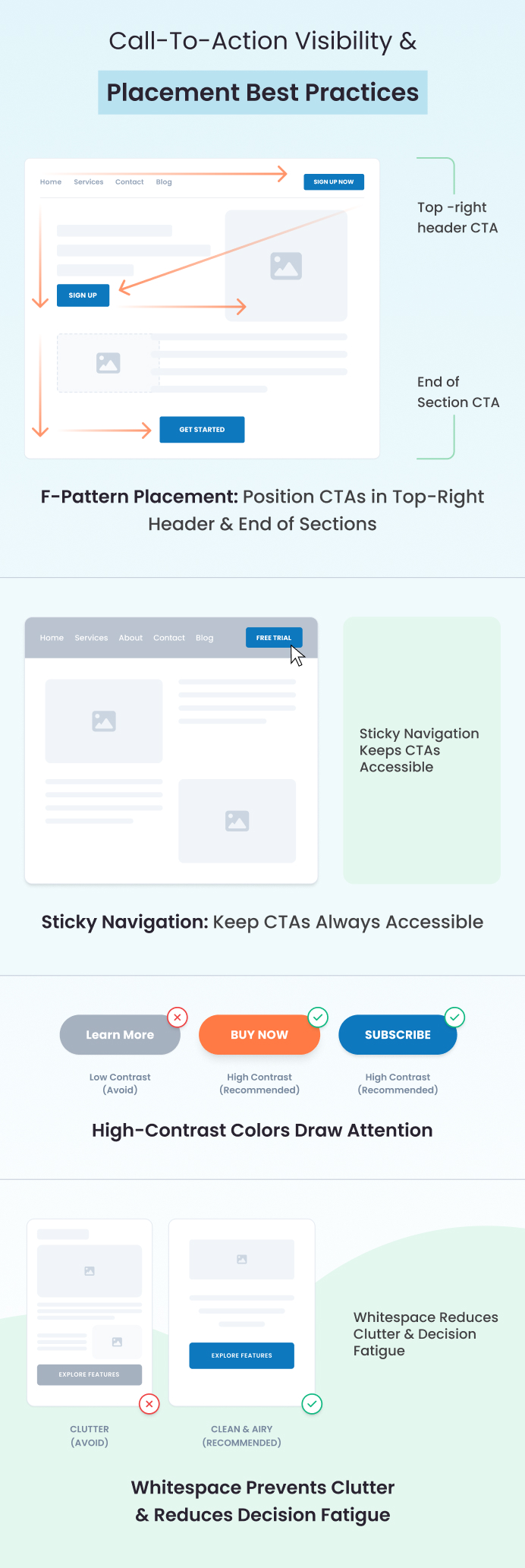
Placement And Visibility of CTAs
CTA visibility depends on smart placement and strong visual contrast. Position CTAs along the natural F-pattern—such as the top-right header and the end of key sections—and use sticky navigation to keep them always accessible. High-contrast colors help draw attention, while sufficient whitespace prevents clutter and reduces decision fatigue, making users more likely to take action.
Creating Urgency and Clarity
The most effective CTAs eliminate ambiguity while providing a subtle nudge toward action. Use action-oriented, specific language to achieve clarity; for example, “Download Your Heart Health Guide” is far more compelling than a generic “Submit.”
To create a sense of professional urgency, phrases like “Check Next Available Slot” or “Speak with a Specialist Today” highlight immediate availability without sounding like a high-pressure sales pitch. In healthcare, this urgency should always be balanced with empathy, shifting the tone from “Buy Now” to “Start Your Recovery Today”—to ensure the patient feels supported rather than sold to.
See how these four design principles work together in the infographic below to create CTAs that capture attention and drive action.
Building Trust with Reviews and Testimonials
In the healthcare industry, trust is the primary currency. Before a patient ever meets a doctor, they look for validation from others who have received the same treatment. In India, where community and recommendations carry immense weight, digital reviews have become the modern-day word-of-mouth.
Here is how you can leverage reviews and testimonials to build a foundation of trust:
Importance Of Patient Reviews
Reviews are often the first thing a patient looks at when your hospital appears in a Google search. They act as a transparent window into the patient experience.
Online reviews play a major role in patient decisions, with over 90% of people reading them before choosing a provider. Positive feedback on platforms like Google or Practo often has more impact than traditional marketing. Reviews also boost your search visibility. A consistent flow of recent, positive ratings improves local SEO, helping your hospital rank higher for “near me” searches.
Showcasing Testimonials Effectively
Testimonials are stories of recovery, and how you present them shapes their impact. Video testimonials are especially powerful, capturing emotion and authenticity better than text. Focus on specific, detailed feedback to boost credibility, and place testimonials strategically across your website—especially near service pages and key CTAs—to drive stronger action.
Managing And Responding To Feedback
How you handle feedback—especially negative—reflects your commitment to patient care. Responding to reviews builds trust, whether by acknowledging positive ones, addressing concerns professionally, or resolving them offline. Encouraging regular feedback through simple follow-ups, such as SMS or WhatsApp, keeps reviews fresh and boosts credibility and visibility. At the same time, structured reputation management helps turn patient experiences into a growth driver.
Optimizing for Local SEO and “Near Me” Searches
For a hospital in India, Local SEO is the digital equivalent of having a massive, illuminated signboard on a busy highway. When a patient in Ahmedabad or Delhi searches for “Emergency room near me” or “Best cardiologist in Ahmedabad,” they are looking for a physical destination to visit immediately.
Here is how to dominate local search results and capture high-intent patients in your area:
Google Business Profile Optimization
Your Google Business Profile is often the very first thing a patient sees, even before they click on your website. In 2026, a fully optimized profile is non-negotiable for appearing in the Local 3-Pack (the top three map results).
- Claim and verify your profile to build trust and prevent misinformation.
- Complete your listing with detailed service categories, such as pharmacy, diagnostics, or specific specialties.
- Add high-quality photos of your hospital, including the exterior, interiors, and facilities, as visuals increase engagement and credibility.
- Keep your profile active by sharing regular updates, such as holiday hours, health camps, or new doctor announcements, to signal reliability to both patients and search engines.
NAP Consistency Across Platforms
NAP stands for Name, Address, and Phone Number. For search engines, consistency is the ultimate signal of legitimacy.
Keep your NAP consistent across all platforms, since even small variations can hurt search rankings. Using a local phone number also strengthens your presence as a community provider. Regularly audit your listings to fix duplicates or outdated details, since inconsistent information is a common reason for drops in “near me” search visibility.
Location-Based Keywords And Pages
If your hospital has multiple branches or serves specific neighborhoods, a single “Contact Us” page is not enough. You need dedicated landing pages that speak to those specific locations.
Focus on hyper-local keywords like “Best Eye Hospital in Vastrapur” or “Eye Specialist near Lal Baug” to attract high-intent patients with less competition. Create dedicated pages for each branch with unique details, maps, doctors, and local testimonials to improve relevance and trust.
Additionally, publish content tailored to regional health concerns to position your hospital as a local authority and boost visibility in local search results.
Build A Trust & Visibility across local search results
Scale My Digital presenceCreating Patient-Centric Content That Converts
Being patient-centric is the benchmark for trust. Patients no longer wait for a doctor’s appointment to seek answers; they start their journey in a search engine. To convert a casual reader into a scheduled patient, your content must bridge the gap between clinical authority and empathetic accessibility.
Blogging For Healthcare Topics
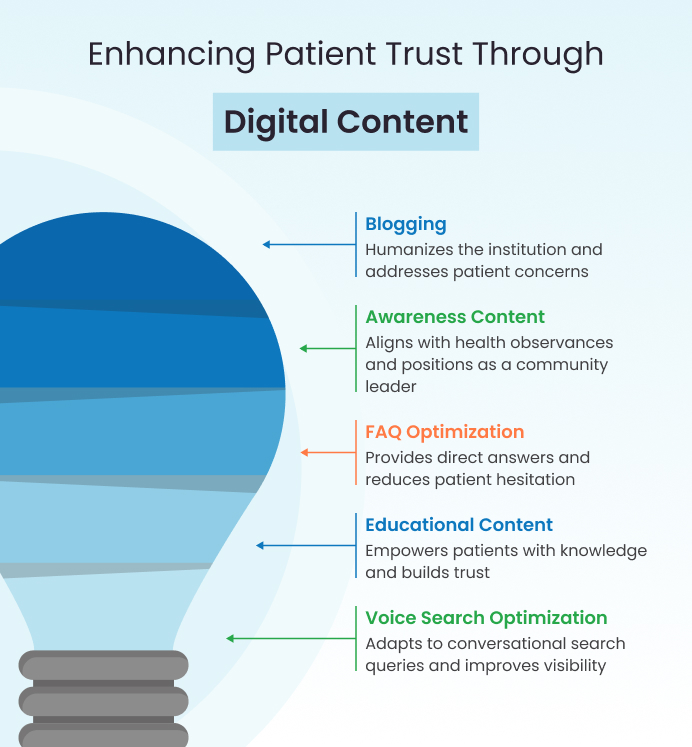
A healthcare blog helps humanize your institution. While your homepage may feel formal, blogs let you address patient concerns, share success stories, and offer wellness tips—positioning you as a trusted partner, not just a provider.
From an SEO perspective, blogs boost visibility by signaling freshness and expertise. Regularly publishing focused, well-researched content helps your site rank higher, ensuring patients find your information when searching for symptoms or treatments.
To convert readers into patients, every blog needs a clear, easy CTA. Whether it is booking a consultation, finding a doctor, or downloading a checklist, guiding the next step turns interest into action.
Educational And Awareness Content
Educational content acts as the preventive medicine of digital marketing. By explaining symptoms, risks, and treatments in simple terms, you empower patients and build trust in your expertise.
Awareness content extends this impact by aligning with health observances like Breast Cancer or Heart Health Month, thereby positioning your brand as a socially responsible community leader.
Using formats such as infographics and short videos makes content more engaging and shareable, helping you expand your reach through digital word-of-mouth.
Voice Search And FAQ Optimization
With the rise of voice search, patients now ask full, conversational questions instead of typing keywords. Optimizing for this means using long-tail, natural language that reflects how people actually speak.
A strong FAQ section is key. Structuring content in clear Q&A formats helps you appear in featured snippets, “People Also Ask,” and voice assistant results by providing direct answers.
FAQ optimization also reduces patient hesitation. By addressing common concerns like insurance, parking, and visit prep, you remove friction and make it easier for patients to take the next step.
Simplifying Appointment Booking and Lead Capture
In the modern digital landscape, your website’s booking process is often the first handshake a potential client experiences. If that handshake is confusing, they will likely walk away before the conversation even starts.
Easy-To-Use Appointment Forms
The best forms feel like a conversation, not an interrogation. Keep them minimalist by asking only essential information, as extra fields add friction and reduce conversions. Ensure mobile optimization with thumb-friendly buttons and the right input keyboards for a smoother experience. Features like date pickers, auto-fill, and smart defaults further simplify the process, making it faster and more user-friendly.
Reducing Friction In The User Journey
Friction is anything that causes users to hesitate or drop off. To create a smooth booking experience, provide instant confirmation to remove uncertainty and reinforce a clear value proposition to keep users motivated. For multi-step processes, use progress indicators to show how close they are to completion and encourage them to finish.
Integrating Chat And Inquiry Options
Not every visitor is ready to book immediately—many just have a quick question. A flexible approach helps capture these users through options such as “Quick Chat” and “Send a Message” alongside the booking calendar. Automated chat can answer FAQs and guide users toward booking, while a persistent “Book Now” or “Chat” button keeps conversion options visible and accessible at all times.
Reduce No-shows with automated whatsapp reminders
Enable smart remindersFuture Trends in Healthcare Website Optimization
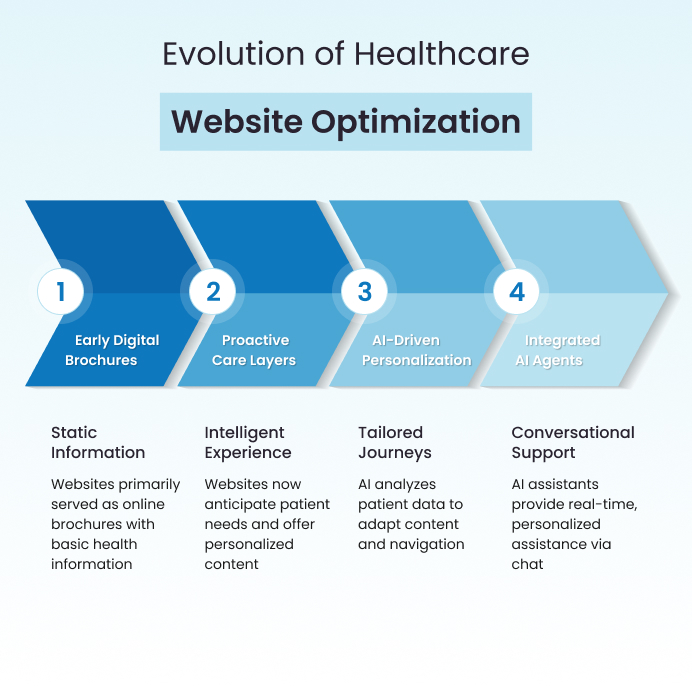
Healthcare website optimization has shifted from simple digital brochures to proactive, intelligent care layers. The focus is no longer just on providing information, but on creating a seamless, high-trust environment that anticipates patient needs.
AI And Personalization
AI-driven personalization is at the core of the patient journey, replacing generic interfaces with “smart” experiences tailored to each user. Websites now use predictive analytics to adapt content and navigation based on a patient’s history or needs—such as showing follow-up care or lab results upfront.
Integrated AI agents and assistants further enhance this with conversational, personalized support via tools such as symptom checkers and triage systems. This shift from reactive to proactive care makes the digital experience a seamless extension of the clinical team.
Voice Search Growth
Voice search has evolved into a core interaction channel, powered by AI and assistants like Siri and Alexa. Healthcare providers now focus on “conversational SEO,” optimizing for natural, long-tail queries instead of short keywords.
Websites use structured data and FAQs to become trusted sources for AI assistants and to capture high-intent searches. Voice-driven actions, such as booking appointments or refilling prescriptions, are also growing in popularity, improving accessibility for older adults and people with motor impairments.
Increasing Importance of UX and Trust
The “human-first” design philosophy now defines healthcare UX, focusing on reducing stress through minimalist layouts, calming visuals, and intuitive interactions.
Trust comes from transparency in AI decisions and data handling, not just compliance. Fast, secure experiences act as key trust signals, while slow or clunky interfaces raise concerns.
Conclusion
Optimizing your hospital website is a fundamental requirement for succeeding in today’s rapidly evolving digital healthcare ecosystem. At MedGrowthEngine.ai, we prioritize a mobile-first approach, clear value propositions, and seamless appointment booking to transform your website from a static page into a high-performing patient growth engine. We believe consistency is key—maintaining fast load speeds, publishing fresh educational content, and proactively responding to patient reviews helps build lasting trust beyond the first click.
Get in touch with MedGrowthEngine.ai to create a frictionless digital journey that attracts more visitors, converts them into loyal patients, and drives long-term growth while strengthening your community presence.
Frequently Asked Questions
Since over 97% of Indian youth use smartphones as their primary source for health information, most patients will first encounter your hospital on a mobile device. A mobile-friendly site allows users to quickly find doctors, check insurance coverage, and book appointments without unnecessary delays or navigation issues.
Website speed is essential for building trust. If your site takes more than three seconds to load, you risk losing over half of potential patients. A fast website demonstrates professionalism and reliability, while a slow one may raise concerns about care quality and data security.
- Informational intent refers to patients researching symptoms or treatments (e.g., “Why does my knee hurt?”).
- Transactional intent occurs when patients are ready to take action (e.g., “Best cardiologist near me”). A well-designed website provides informative articles for those researching and clear options to book or contact for those ready to act, ensuring you engage patients at every stage.
To improve local search rankings, let MedGrowthEngine.ai optimizes your Google Business Profile and ensure your Name, Address, and Phone number (NAP) are consistent across all platforms. Use local keywords and create dedicated pages for each branch to help search engines connect your hospital with nearby patients seeking care.