





Sep 16/2026

AI is changing how dermatology and cosmetic clinics attract, communicate with, and retain patients. From answering routine inquiries and responding to leads to analyzing patient behavior and automating follow-ups, AI can take over many repetitive tasks that once required manual effort. But not every part of the patient journey should be automated.
In dermatology and aesthetics, patients are often making personal decisions about their appearance, skin health, and treatment options. They need quick access to information, but they also need trust, reassurance, clinical judgment, and a human connection.
The real opportunity is not to replace human interaction with AI, but to use AI where it improves efficiency while keeping people at the center of care.
This article explores where AI and automation can add value across a modern dermatology practice and where human involvement remains essential.
Where Can AI Add Value in a Modern Dermatology Practice?
A dermatology practice today operates far beyond the consultation room.
Patients may discover a dermatologist through Google Search, social media, online reviews, educational content, paid advertising, or referrals. They may then visit the website, compare treatments, submit an inquiry, call the clinic, send a WhatsApp message, and decide whether to book a consultation.
Behind that journey, the practice team is managing multiple operational tasks:
- Responding to patient inquiries
- Following up with potential patients
- Managing appointment requests
- Sending reminders
- Handling rescheduling
- Creating educational content
- Managing social media workflows
- Tracking marketing campaigns
- Monitoring lead sources
- Measuring appointment conversions
- Re-engaging patients
- Managing reviews and reputation
Many of these processes do not require a dermatologist’s time. This is where AI and automation can make a meaningful difference.
A well-designed AI-enabled practice can use automation to:
- Respond to routine inquiries quickly
- Capture and organize leads
- Qualify inquiries based on predefined criteria
- Route complex questions to staff
- Automate appointment reminders
- Trigger follow-up communication
- Identify opportunities for patient re-engagement
- Support content creation
- Analyze marketing performance
- Connect marketing activity with patient acquisition
The goal is to create a more efficient, responsive, and measurable practice.
What Should Be Automated in Dermatology Practice?
The best automation opportunities are usually repetitive, predictable, time-sensitive, low-risk tasks.
These processes can consume significant staff time when handled manually, even though they add relatively little strategic value.
Patient Inquiry and Initial Response
Speed matters when a prospective patient contacts a dermatology or aesthetic clinic.
A person searching for acne treatment, pigmentation treatment, hair restoration, laser procedures, skin rejuvenation, injectables, or another service may be comparing several clinics at the same time.
If one clinic responds immediately while another takes several hours, the faster clinic has an obvious advantage.
AI-powered patient communication can help practices:
- Acknowledge new inquiries
- Collect basic information
- Answer approved frequently asked questions
- Provide basic service information
- Share consultation details
- Direct patients toward booking
- Notify staff when human intervention is required
For example, an automated workflow can respond to questions about clinic timings, location, available services, consultation processes, or appointment scheduling.
The key distinction is that automation should handle routine information, not replace clinical advice.
Appointment Booking and Reminders
Appointment management is another area where automation can reduce unnecessary administrative work.
Automated systems can support:
- Appointment requests
- Booking confirmations
- Reminder messages
- Rescheduling workflows
- Cancellation communication
- No-show follow-up
- Post-consultation reminders
This creates a more consistent patient experience while reducing the manual tasks reception teams handle.
More importantly, it reduces friction between patient intent and booking an appointment.
Patient Follow-Up and Nurturing
Not every patient who inquires is ready to book immediately.
This is particularly common in aesthetic dermatology.
A prospective patient considering laser treatment, hair restoration, skin rejuvenation, injectables, or another elective procedure may need time to research the treatment, understand downtime, compare providers, discuss the decision with family, or simply become more comfortable with the idea.
Depending on the patient’s interaction with the practice, the system can trigger relevant communication while letting staff step in when personal attention is needed.
This is an important part of effective Cosmetic Clinic Lead Generation.
Generating more inquiries is not enough. A clinic also needs the infrastructure to respond to, qualify, nurture, and convert those opportunities.
At MedGrowthEngine.ai, we view patient acquisition as a connected journey, not a collection of disconnected marketing activities.
Content and Social Media Workflows
Content plays an important role in growth for dermatology and aesthetic practices, as patients frequently search online for answers before contacting a clinic.
They may want to understand:
- Why they are experiencing a particular skin concern
- What treatment options exist
- Whether a procedure is suitable for them
- What recovery involves
- How long results may take
- What questions to ask during a consultation
- What they should expect before and after treatment
AI can help practices and marketing teams accelerate content workflows by supporting:
- Topic research
- Content calendars
- Patient-question research
- First-draft creation
- Content repurposing
- Social media ideas
- Video scripts
- FAQ development
- Content organization
However, AI-generated content should never bypass professional review. Medical and aesthetic content must reflect the clinic’s expertise, remain accurate, and avoid unsupported promises or exaggerated claims.
This is particularly important when working with a marketing agency for cosmetic clinics. The agency may be able to accelerate content production, but the clinic’s clinical expertise must remain part of the approval process.
Reporting and Marketing Analytics
Many dermatology practices invest in multiple marketing channels without having a clear view of what actually drives patient acquisition.
A practice may be receiving:
- Website inquiries
- Phone calls
- WhatsApp leads
- Google Ads leads
- Social media inquiries
- Organic search traffic
- Referral patients
- Repeat patients
Counting inquiries alone doesn’t tell the full story. AI and connected reporting systems can help practices analyze:
- Lead volume
- Lead sources
- Response time
- Lead quality
- Appointment conversion
- Cost per lead
- Patient acquisition cost
- Service-level demand
- Campaign performance
- Follow-up performance
This allows practice owners and marketing teams to move from "How many leads did we get?" to "Which marketing activities are generating patients?"
That is a much more valuable business question.
At MedGrowthEngine.ai, we connect the full patient acquisition journey—from marketing and lead generation to nurturing, conversion, and retention.
If your practice generates inquiries but lacks visibility into what happens after the lead arrives, a connected growth system can help you identify where you’re losing opportunities.
Ready to Turn Patient Interest into Growth?
Shape Your Growth StrategyWhat Should Stay Human in Dermatology Practice?
Automation is valuable when the process is predictable. Clinical care is not.
Dermatology requires observation, experience, interpretation, communication, and professional judgment. A patient’s history, symptoms, treatment goals, previous procedures, skin characteristics, medications, expectations, and response to treatment can all influence the appropriate course of care.
This is why AI should support dermatologists and practice teams, not replace them.
Several parts of the patient journey should remain firmly human-led.
Diagnosis and Clinical Judgment
Diagnosis involves much more than matching symptoms to a database.
A dermatologist may consider:
- Patient history
- Symptoms
- Physical examination
- Clinical presentation
- Previous treatments
- Relevant medical conditions
- Differential diagnoses
- Response to earlier treatment
AI may support information organization or specific clinical workflows, but the dermatologist remains responsible for interpreting the available information and making the clinical judgment.
Automation should never create ambiguity about who is accountable for patient care.
Treatment Decisions
Treatment decisions also require professional judgment.
Two patients presenting with similar concerns may need different treatments because of their medical history, previous treatments, skin characteristics, expectations, or other factors.
A dermatologist may need to evaluate:
- Treatment suitability
- Potential risks
- Contraindications
- Previous procedures
- Patient expectations
- Treatment goals
- Likely outcomes
- Aftercare requirements
AI can potentially assist with information and workflow management. The clinician should still lead the treatment decision.
The Dermatologist–Patient Conversation
Technology can speed communication, but it cannot replace meaningful human conversation.
A patient may be concerned about acne, scarring, hair loss, pigmentation, aging, or another visible condition that affects confidence and quality of life. In aesthetic care, the emotional side of the consultation can matter as much as the clinical side.
Patients may have questions about:
- Whether a treatment is right for them
- How natural the results may look
- What risks exist
- How much downtime to expect
- What happens if they do not achieve the desired result
- Whether their expectations are realistic
These conversations require empathy, context, and trust.
The consultation should therefore remain a space where the dermatologist listens, explains, manages expectations, and helps the patient make an informed decision.
Sensitive and Complex Patient Situations
Some situations cannot be handled effectively through automated workflows.
These may include:
- Unrealistic expectations
- Concerns about previous procedures
- Treatment dissatisfaction
- Complications
- Unexpected outcomes
- Highly sensitive concerns
- Patients requiring additional reassurance
- Situations requiring clinical escalation
Automation should recognize these situations and make it easier for a human team member to intervene.
The objective should always be: Automation when appropriate. Human attention when necessary.
AI in Clinical Dermatology: Assistance vs. Replacement
The most practical way to approach AI in clinical dermatology is to think in terms of assistance, not replacement.
AI can potentially help clinicians and staff:
- Organize information
- Summarize documentation
- Support administrative workflows
- Reduce repetitive tasks
- Identify patterns in operational data
- Support research workflows
- Improve documentation efficiency
But an AI system generating an output does not mean that the output should automatically become a clinical decision.
A responsible model looks like this:
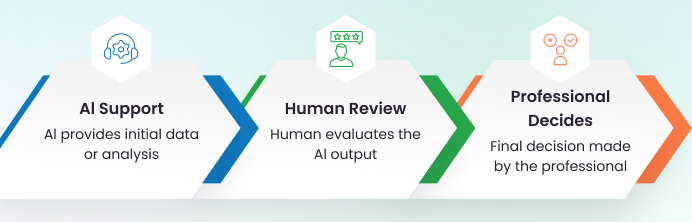
This principle should extend across the practice.
Where AI Can Support Clinicians
A human-in-the-loop model (HITL) allows practices to gain the benefits of AI while maintaining professional oversight. This approach can reduce administrative burden without transferring clinical responsibility to software.
AI handles what it does best: speed, repetition, organization, and pattern recognition. People handle what requires judgment, empathy, accountability, and relationships.
Where AI Should Not Become the Final Decision-Maker
Dermatology practices should establish clear boundaries around AI.
AI should not independently determine:
- A definitive diagnosis without appropriate clinical evaluation
- A patient’s treatment plan
- Whether a patient is clinically suitable for a procedure
- How a complication should be managed
- How sensitive clinical information should be communicated
- Whether an elective procedure should be performed
- How an unexpected clinical situation should be handled
The exact boundaries will depend on the technology, workflow, and applicable requirements.
But the underlying principle remains consistent:
AI can support clinical workflows. Clinical responsibility stays with qualified professionals.
The Human-in-the-Loop Model
The human-in-the-loop model provides a practical framework for AI adoption. Rather than letting AI operate without oversight, the practice establishes specific points where staff or clinicians review, approve, or intervene.
- Marketing Workflow: AI assists with drafting → Marketing team reviews → Clinical team reviews where necessary → Content is approved.
- Lead Management: AI captures inquiry → Automation handles routine communication → Staff handles complex inquiries.
- Patient Nurturing: Automation triggers relevant follow-up → The team intervenes when personal communication is needed
- Clinical Workflow: AI supports information management → Dermatologist reviews → Dermatologist makes the decision.
This model allows practices to gain efficiency without sacrificing control.
AI in Aesthetic Practice: Improving the Patient Experience
Aesthetic practices have a particularly complex patient journey.
A prospective patient might:
- See an Instagram post
- Search Google for the treatment
- Visit the clinic website
- Read reviews
- Compare doctors
- Submit an inquiry
- Ask questions on WhatsApp
- Receive follow-up communication
- Book a consultation
- Meet the dermatologist
- Decide whether to proceed
- Receive treatment
- Return for follow-up
- Consider another service
- Refer someone else
Every stage presents opportunities for better organization.
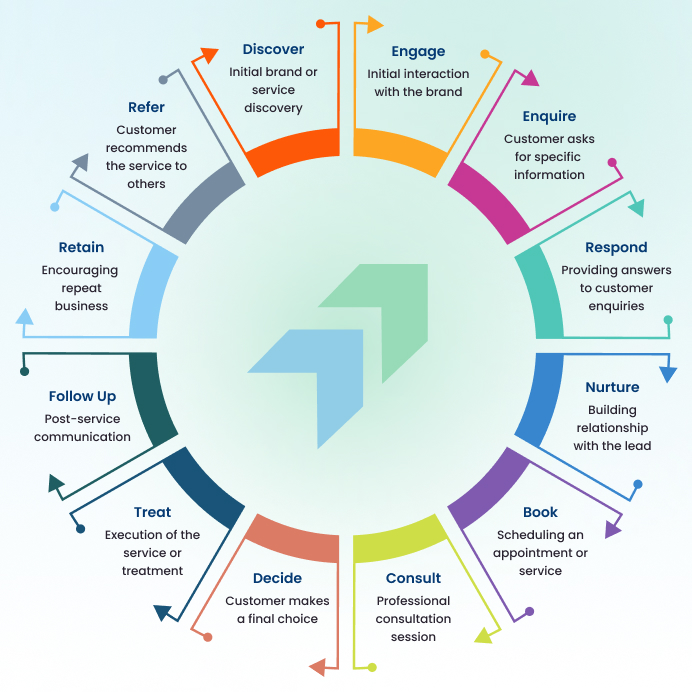
The goal is to ensure patients don’t experience unnecessary delays or disconnected communication.
This is where AI can improve the aesthetic patient experience while keeping the consultation and care experience human.
Personalization Without Losing the Human Touch
Automation and personalization do not have to be opposites. A well-designed system can use information about a patient’s inquiry to make communication more relevant.
For example,
– A person interested in hair restoration should not necessarily receive the same follow-up communication as someone asking about acne treatment.
– A patient researching skin rejuvenation may benefit from educational content about consultation expectations, treatment options, and recovery.
This creates a more relevant journey.
However, personalization should support patient decision-making—not manipulate it. Patients should always have access to accurate information and an appropriate route to human assistance.
AI and the Dermatology Patient Journey
The biggest opportunity may not be a single AI tool. It is connecting the different stages of the patient journey.
Patient Journey Stage | AI & Automation Opportunity | Human Role |
|---|---|---|
Discovery | Content insights, SEO research, audience analysis | Strategy and clinical expertise |
Inquiry | Lead capture and instant response | Complex questions |
Qualification | Lead organization and routing | Determine next steps |
Nurturing | Automated, relevant follow-up | Personal communication |
Booking | Scheduling and reminders | Handle exceptions |
Consultation | Documentation support | Diagnosis and clinical judgment |
Treatment | Administrative coordination | Treatment decisions and care |
Follow-Up | Reminders and routine communication | Clinical assessment |
Retention | Re-engagement workflows | Relationship building |
Referral | Review and referral workflows | Patient relationship |
This connected approach is particularly relevant to modern cosmetic clinic lead generation.
A lead should not exist in isolation. The practice needs to understand what happened before the inquiry, what happened after, whether an appointment was booked, and whether the patient relationship continued.
The Risks of Over-Automating Dermatology Practice
AI can improve efficiency, but poorly designed automation can introduce new risks. The goal should be to automate the right tasks.
Losing the Human Connection
If every patient interaction feels automated, the practice can become transactional. Patients may become frustrated if they cannot reach a person when they have a question that falls outside the automated system.
Automation should therefore create a faster path to human support rather than becoming a barrier.
Inaccurate or Inappropriate AI Responses
AI systems can produce incorrect, incomplete, or contextually inappropriate responses. In healthcare, this can affect both patient experience and trust.
Practices should establish:
- Approved response areas
- Escalation rules
- Human review requirements
- Clear limitations
- Ongoing quality checks
If the system cannot confidently handle a question, the appropriate response may be to involve a human.
Patient Privacy and Data Concerns
Patient data requires careful consideration when introducing any new technology.
Practices should understand:
- What data the system collects
- Where information is stored
- Who can access it
- Which platforms are connected
- How information is processed
- What security controls exist
- What privacy obligations apply
Appropriate data governance and security practices should accompany AI adoption.
Over-Reliance on AI-Generated Content
AI can accelerate content production. But healthcare content cannot be treated like generic marketing copy.
Content should be:
- Accurate
- Responsible
- Clinically appropriate
- Clear for patients
- Consistent with the clinic’s expertise
- Reviewed where necessary
AI should make content workflows more efficient—not remove professional oversight.
Medical Misinformation and Unsupported Claims
One of the most significant risks of using AI for healthcare content is presenting uncertain or unsupported information as fact.
This can damage:
- Patient trust
- Brand reputation
- Professional credibility
- Marketing performance
For this reason, AI-generated healthcare content should have a defined review process.
Trust, Transparency, and Professional Reputation
Technology should strengthen a dermatology practice’s reputation, not weaken it. Patients want to know that real professionals are responsible for their care.
The practice should therefore consider how it presents automated communication and when to transfer patients to a team member. The more sensitive the interaction, the more important human involvement becomes.
How Dermatology Practices Can Introduce AI Without Disrupting Care
AI adoption does not need to happen all at once. A structured approach can help practices introduce automation without disrupting existing operations.
Start With Repetitive, Low-Risk Tasks
Begin with workflows such as:
- Appointment reminders
- Basic FAQs
- Lead notifications
- Internal summaries
- Routine follow-up
- Marketing reporting
- Content organization
These areas can deliver meaningful efficiency while keeping clinical decisions untouched.
Keep Clinical Decisions Human-Led
Establish a clear distinction between operational automation and clinical decision-making.
AI can support the process. The dermatologist remains responsible for patient care.
Establish Review and Approval Workflows
Every AI-assisted process should have a clear owner.
For example: AI-assisted content → Marketing review → Clinical review where required → Approval → Publication
This creates accountability.
Define What AI Can and Cannot Do.
Before implementation, document:
- Approved use cases
- Restricted use cases
- Escalation triggers
- Human approval points
- Data access requirements
- Quality-control processes
Clear boundaries make AI adoption safer and easier to manage.
Train Staff to Work With AI
AI adoption is not simply a software implementation. The people using the system need to understand:
- What the automation does
- When to intervene
- When to escalate
- How to review AI-generated outputs
- How to maintain the patient experience
The objective is to make staff more effective—not simply reduce headcount.
Monitor Accuracy, Patient Experience, and Outcomes
Measure AI performance beyond time savings.
Track metrics such as:
- Response time
- Lead-to-appointment conversion
- Appointment attendance
- No-show rate
- Lead quality
- Patient satisfaction
- Escalation rate
- Staff workload
- Patient retention
- Marketing performance
A successful AI implementation should improve the practice without compromising the patient experience.
Measuring the Impact of AI in Dermatology Practice
You can evaluate AI’s impact across three areas.
- Operational Efficiency (Time saved, response speed, administrative workload, appointment management efficiency, follow-up consistency)
- Patient Experience (Ease of inquiry, response time, booking experience, follow-up quality, access to human support, patient satisfaction)
- Business and Marketing Performance (Qualified leads, consultation bookings, lead-to-appointment conversion, cost per lead, patient acquisition cost, service-level demand, marketing channel performance, patient retention)
For a growing aesthetic practice, these metrics connect AI implementation to real business outcomes.
The Future of AI in Dermatology
The future of AI in dermatology is likely to extend beyond individual automation tools. Instead of using disconnected systems for marketing, lead management, communication, scheduling, and reporting, practices can increasingly connect these functions.
When these stages are connected, practice owners can understand not only where leads come from but what happens to them afterward.
This creates a much more useful view of practice growth. For aesthetic practices, the opportunity is particularly significant.
- Marketing generates demand.
- AI and automation can help respond to that demand.
- Nurturing can maintain engagement.
- Scheduling can reduce friction.
- The clinical team can focus on consultation and care.
- Analytics can reveal which activities drive growth.
This is the foundation of a more intelligent practice management model.
How MedGrowthEngine.ai Can Help Dermatology and Aesthetic Practices
AI is most valuable when it is connected to a clear growth strategy. At MedGrowthEngine.ai, we help healthcare and aesthetic practices build more connected patient acquisition and marketing systems.
That means looking beyond individual campaigns or lead counts and understanding the full journey:
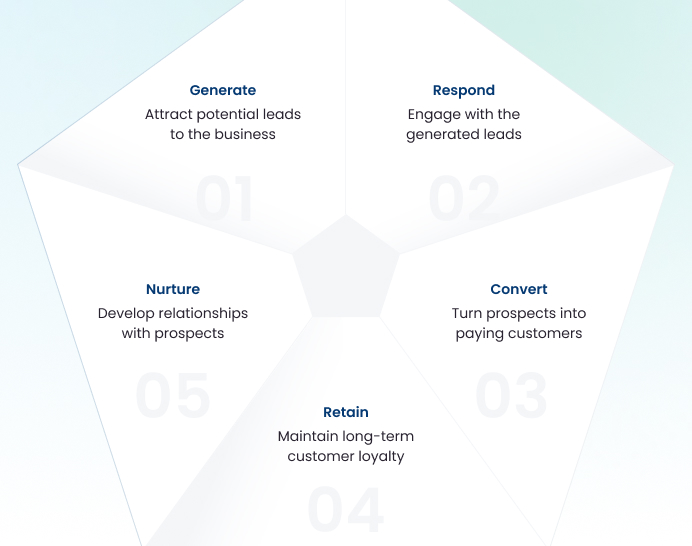
For dermatology and cosmetic practices, this can mean bringing together:
- Digital marketing
- SEO
- Paid advertising
- Lead generation
- Lead management
- Patient nurturing
- Appointment conversion
- Marketing analytics
- Automation
- Retention workflows
The goal is to remove repetitive work, improve visibility, and help the team focus on higher-value patient interactions.
Whether you are building a cosmetic clinic lead generation strategy or improving your existing marketing funnel, the first step is understanding where patients are being lost across the journey.
Connect. Automate. Grow.
Talk to MedGrowthEngine.ai
Conclusion
AI has an important role to play in the future of dermatology and aesthetic practice management. But the goal should not be to automate everything.
Repetitive administrative tasks, appointment reminders, initial responses, follow-up workflows, content processes, and marketing analytics are strong candidates for automation.
Diagnosis, treatment decisions, complex consultations, sensitive situations, clinical responsibility, and meaningful patient relationships should remain human-led.
The most effective model is therefore not: AI vs. Humans. It is: AI + Human Expertise
AI can handle repetition, speed, organization, and data. People provide clinical judgment, empathy, accountability, trust, and relationships. For dermatology and aesthetic practices, that combination can create a faster, more connected patient journey without losing its human touch.
The future of intelligent dermatology practice is about giving dermatologists and their teams more time to focus on what technology cannot replace.
Frequently Asked Questions
AI can help cosmetic clinics understand patient intent, respond to inquiries faster, personalize communication, support appointment booking, automate follow-ups, and analyze patient journey data. A marketing agency for cosmetic clinics can use these tools to make the patient journey more connected and measurable while keeping clinical decisions human-led.
Tasks such as lead capture, instant inquiry responses, appointment scheduling, reminders, follow-up messages, review requests, and repeat-treatment reminders can often be automated. These processes can also strengthen cosmetic clinic lead generation by ensuring potential patients receive timely responses and consistent communication.
No. AI can support communication and administrative processes, but consultation, treatment recommendations, informed decision-making, and sensitive patient conversations should remain human-led. The goal is to use AI to enhance the patient experience, not remove the human touch.
AI can help identify search and content trends, capture inquiries, understand patient interests, and trigger personalized follow-up communication. This lets a marketing agency for cosmetic clinics move beyond lead generation and build a more consistent system for nurturing potential patients through consultation and booking.
Clinics can track metrics such as inquiry-to-consultation conversion, booking rates, response times, lead-to-patient conversion, follow-up engagement, repeat treatments, referrals, and patient acquisition costs. These metrics help evaluate whether efforts contribute to consultations, treatments, and long-term patient growth.