





Sep 25/2026
Social media has become an important part of how dermatology practices attract attention and build trust. Instagram, in particular, gives practices a powerful way to showcase expertise, educate patients, and introduce treatments to people who may not be ready to book yet. But social media visibility does not automatically translate into a full appointment calendar.
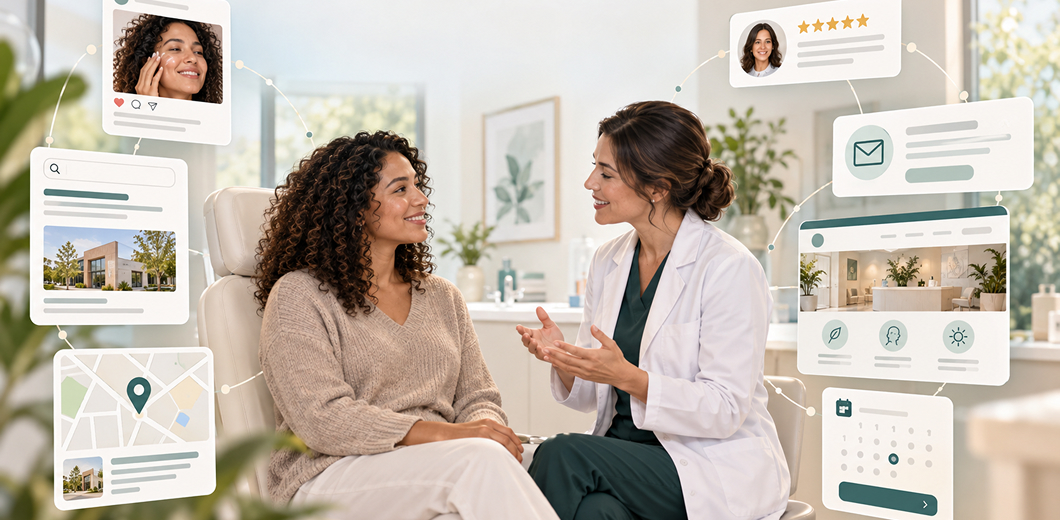
A patient may discover a dermatologist through an Instagram Reel, search Google for the treatment, visit the practice website, check reviews, and then reach out via WhatsApp or phone. Each interaction can influence whether the patient moves forward or chooses another practice.
This article explores an omnichannel strategy that brings these touchpoints together to create a more consistent experience, from discovery and research to inquiry, consultation, treatment, and follow-up.
What Does an Omnichannel Patient Acquisition Strategy Mean for Dermatology?
For a dermatology practice, omnichannel patient acquisition means creating a connected experience across the different places where a patient discovers, evaluates, and interacts with the practice. It is not about being present on every digital platform. It is about making sure the channels you use work together rather than operate independently.
A patient may first discover a dermatologist through an Instagram post, search Google for the treatment, visit the clinic website, check reviews, and then contact the practice through WhatsApp. Another patient may start with a Google search, compare two or three clinics, visit their Instagram profiles, and call the clinic after seeing relevant treatment information.
These are different starting points, but both journeys involve multiple touchpoints before the patient decides. Dermatology patients may also research treatments extensively online before contacting a practice, so consistency across these touchpoints matters.
The Difference Between Multichannel and Omnichannel
A multichannel strategy means a practice uses several channels like Instagram + Google + Website + WhatsApp + Reviews. But simply having all these channels does not make the strategy connected.
An omnichannel strategy connects them:
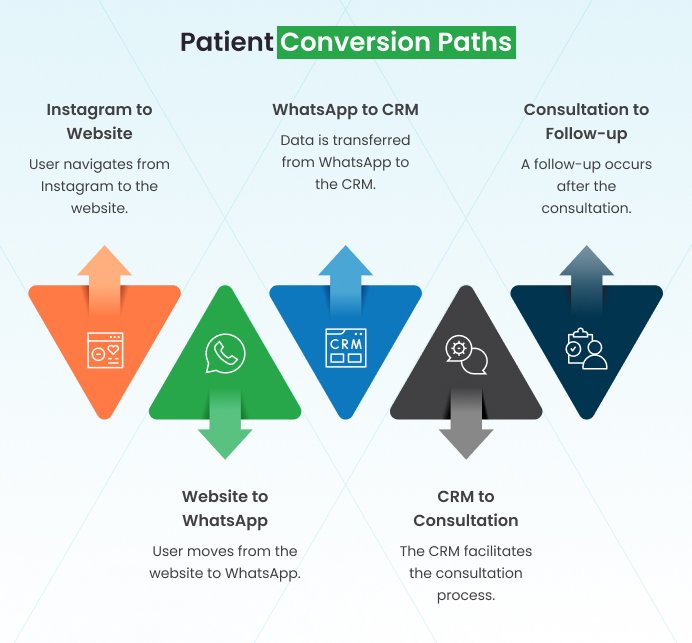
Each interaction should make the next step easier.
For example, if an Instagram Reel sparks interest in acne scar treatment, the patient should be able to move naturally from the Reel to a relevant treatment page, understand the treatment, find information about the dermatologist, and enquire without starting the search again.
The same principle applies to Google. A patient who finds a treatment page through search should be able to understand the service, evaluate the practice, and contact the clinic from that same journey.
Why This Matters for Dermatology Practices
Dermatology has a particularly strong digital discovery component because patients often research skin, hair, and aesthetic concerns before approaching a doctor. The internet can influence how patients understand their condition, evaluate information, and decide when to seek professional care.
This means the patient journey does not necessarily begin with an inquiry. It may start with a question, followed by a Google search, a social media profile visit, checking reviews, exploring the practice website, and finally reaching out with an inquiry.
If these touchpoints are disconnected, the practice can lose patients even when individual channels appear to be performing well.
For example, a clinic may have strong Instagram engagement but a website that does not clearly explain its treatments. Or it may generate inquiries through Google Ads, but respond slowly to WhatsApp messages. Another practice may have good visibility but weak reviews that create hesitation at the final decision stage.
An omnichannel strategy looks at these gaps as part of one patient acquisition system rather than separate marketing problems.
The Goal: Better Channel Handoffs.
The real value of omnichannel marketing comes from how effectively channels hand patients off to the next step.
- A social media post should lead somewhere useful
- A Google search should provide relevant information
- The website should make it easy to inquire
- WhatsApp or the call team should respond quickly and seamlessly
- The CRM should help the practice track and follow up on the inquiry
- The consultation should continue the experience established online.
Together, these touchpoints create a connected patient journey, such as:
Discover → Research → Enquire → Respond → Nurture → Book → Consult → Treat → Follow Up → Return → Refer
Turn Every Patient Touchpoint Into a Growth Opportunity
Book a DemoWhere the Modern Dermatology Patient Journey Begins
A modern dermatology patient may not start their journey by searching directly for a clinic. The first touchpoint should naturally lead the patient to the next one, moving from discovery to deeper research without making them start the journey again.
Google Search to Website: Capturing Existing Intent
When a patient searches for a treatment, skin concern, or dermatology service on Google, they are often already looking for information or considering their options. The search result is only the starting point.
The next step should take them to a relevant website page that continues the same conversation. If someone searches for acne scar treatment, for example, they should land on information that directly addresses that treatment.
Instagram to Website: Turning Interest Into Intent
Social media often works differently. A patient may discover a dermatologist or treatment through an Instagram Reel, educational post, or treatment-focused content before they actively search for it. The opportunity is to turn that initial interest into a deeper patient journey.
For example, a patient watches an Instagram Reel about a treatment, visits the practice profile, and clicks through to the website. The website should then provide the detailed information they need to evaluate that treatment and decide whether to enquire.
This hand-off matters because social media may create initial interest, while the website helps turn that interest into patient intent.
Whether the patient arrives from Google or Instagram, the website should not feel like a separate destination. It should feel like the next step in the same conversation.
If a patient discovers a treatment on Instagram, the website should provide relevant information. When they move to WhatsApp, the conversation should reflect what they were researching. When that inquiry enters the CRM, the practice should retain the source and treatment interest, so follow-up remains relevant.
That is the difference between simply having multiple digital channels and creating an omnichannel patient acquisition journey.
Key Takeaway: The first touchpoint matters—but the hand-off to the next one matters more.
The First Hand-off: From Search or Social Media to the Website
The first interaction may happen on Google or Instagram, but the patient journey should not stop there.
A patient searching Google for a dermatology treatment may click on a relevant treatment page. Another patient may discover the same treatment through an Instagram Reel and visit the practice website to learn more. In both cases, the website becomes the next step in the conversation.
The important question is whether the website continues the conversation that started on the previous channel.
If an Instagram post creates interest in a particular treatment, the link should take the patient to information that answers the questions they are likely to have next. Similarly, someone arriving through Google should not land on a generic page and have to start searching again.
This hand-off also creates an opportunity to understand where patient interest is coming from. A practice should be able to connect the source with what the patient does next, whether they explore another page, click WhatsApp, call, or submit an inquiry.
Key Takeaway: Make the website a continuation of the conversation, not another starting point.
The Second Hand-off: From Website Visitor to Patient Inquiry
Once a patient reaches the website, they are moving from discovery to evaluation. They may be trying to understand a treatment, decide whether it is relevant to them, or determine whether they want to speak with the practice.
The next hand-off happens when that research turns into an inquiry. For example, a patient who has just read about a treatment should not have to return to the homepage to find a contact option. A clear next step, such as WhatsApp, phone, or an inquiry form, should be available within the context of what they are researching.
This is where a strong omnichannel journey differs from having multiple channels. The channels do not work independently; each one picks up where the previous one left off.
For practices generating Cosmetic Surgery Patient Leads, this distinction is important. The objective is to create a smoother path from patient interest to meaningful conversation.
Key Takeaway: Make it easy for informed interest to become a conversation.
The Third Hand-off: From WhatsApp or Phone Inquiry to CRM
The conversation may begin on WhatsApp or over the phone, but it should not stay isolated there. Once a patient inquires, the next hand-off moves the conversation from the communication channel into the practice’s CRM or patient-acquisition system.
This is where the context gathered during the earlier stages becomes valuable.
The practice should ideally be able to understand:
- Where the patient came from
- What treatment or service they are interested in
- When they enquired
- Whether they received a response
- What questions or next steps were discussed
- Whether follow-up is required
- Whether a consultation has been booked
For example, if a patient discovered a treatment through Instagram, visited the website, and then contacted the practice on WhatsApp, that journey should not become three disconnected records. The CRM should help connect those interactions.
A patient may receive a generic follow-up, be contacted multiple times by different people, or be missed altogether. With it, the team can understand where the patient is in the journey and determine what should happen next.
Technology can also support the patient experience without replacing human interaction. Routine information and follow-up can be structured, while questions requiring personal understanding or clinical judgment can remain with the appropriate team member.
Key Takeaway: Move the conversation into the CRM without losing its context.
The Fourth Hand-off: From Inquiry to Consultation
Capturing an inquiry is not the same as moving a patient toward consultation. Once the inquiry enters the CRM, the next stage is to keep the conversation moving. Some patients may be ready to book immediately. Others may need answers, additional information, or time before they feel comfortable taking the next step.
The CRM can help the practice see these differences and identify the next action. When the patient is ready, the transition to booking should be straightforward. Appointment availability, confirmation, and reminders should continue the same conversation, not create another disconnected process.
For a cosmetic clinic marketing agency, patient acquisition becomes more measurable. Instead of stopping at the number of inquiries generated, the practice can begin to understand how many inquiries progressed to consultations and where patients dropped off along the way.
Automation can support reminders and routine communication, but the goal is to ensure the right communication happens at the right time, so human interaction is available when it matters.
Key Takeaway: Don’t just capture inquiries; create a clear path from inquiry to consultation.
What Happens After the Consultation?
A consultation may be an important milestone, but it is not the end of the patient journey. The patient may need time to decide, ask additional questions, schedule treatment, prepare for a procedure, or simply stay connected with the practice before taking the next step.
The information gathered before the consultation can help the practice continue the conversation afterward. If the patient has not yet decided, follow-up can address relevant questions or provide the information they need. If they proceed, communication can support the transition into treatment and post-treatment care.
Follow-up communication can help maintain the relationship, while appropriate reminders can support future appointments or ongoing treatment. A positive patient experience can also create opportunities for genuine reviews and referrals, bringing new patients into the same acquisition journey.
This creates a loop rather than a straight line:
Search / Social → Website → Inquiry → CRM → Follow-Up → Consultation → Treatment → Retention → Referral → New Patient
A patient should not feel as though they are moving between separate marketing channels. From their perspective, it should feel like one continuous experience with the practice.
Key Takeaway: Acquisition starts the relationship; connected follow-up helps sustain it.
Building the Follow-Up Sequence Across Channels
Follow-up should continue the conversation that started when the patient first discovered the practice.
By this stage, the patient may have moved through several touchpoints, and each interaction should add context to the next one. If a patient enquired about a specific treatment on WhatsApp, for example, the follow-up should reflect that interest rather than sending the same generic message to every lead.
A connected follow-up sequence can move through different stages depending on where the patient is. The channel can change, but the conversation should remain connected. WhatsApp may be useful for an immediate response, email or messaging may support educational information, a phone call may help with questions that need personal attention, and the CRM should keep track of what has already happened.
The objective is to make each communication more relevant to the patient’s next decision.
Immediate Follow-Up
The first follow-up should acknowledge the patient’s inquiry and clarify the next step. If someone contacts the practice through WhatsApp after visiting a treatment page, the response should connect to that inquiry. It may answer the initial question, clarify what happens next, or help the patient move toward booking a consultation.
Speed matters, but relevance matters too. A fast, generic response may not move the patient forward if it does not address what they actually asked.
Key Takeaway: Respond quickly, but keep it relevant.
Educational Follow-Up
Not every patient is ready to book after the first response. So, instead of sending unrelated content, the practice can share information connected to what the patient asked about, such as treatment information, common questions, consultation details, or what to expect next.
If the patient asked about a particular treatment, the follow-up should help answer the questions that stand between interest and consultation.
Automation can help deliver routine information, while the appropriate team member should handle questions that require clinical understanding.
Key Takeaway: Give patients the information they need for their next step.
Decision-Stage Follow-Up
Even after receiving information, a patient may not be ready to proceed. They may need time to consider their options, discuss the decision, or ask additional questions.
At this stage, follow-up should help remove uncertainty without creating pressure. The CRM can show whether the patient has booked, is still considering the consultation, or needs another follow-up.
It ensures they have the information and support they need to make an informed decision.
Key Takeaway: Follow up according to the patient’s decision stage, not a generic schedule.
Post-Treatment Follow-Up
The same connected journey should continue after treatment; the patient may now need a different type of communication. Instead of acquisition-focused messaging, the focus shifts toward supporting the ongoing patient experience.
This may include appropriate follow-up communication, reminders, answers to questions, and information about the next stage of care.
The CRM connects this communication to the patient’s earlier journey, so post-treatment follow-up does not become a completely separate process.
Key Takeaway: Change the purpose of communication as the patient journey changes.
Long-Term Follow-Up
The patient journey does not necessarily end once treatment is complete. For many dermatology and aesthetic practices, there may be appropriate opportunities for future consultations, ongoing care, or repeat treatments. Staying connected can help the practice remain relevant without overwhelming the patient with unnecessary communication.
The omnichannel follow-up becomes more than a collection of automated messages. The channels, CRM, team interactions, and patient experience work together to maintain continuity throughout the relationship.
For a cosmetic clinic marketing agency, the objective should not be to generate leads for cosmetic clinics and then repeatedly follow up with them. It should create a system where every interaction reflects where the patient has been, where they are now, and the most relevant next step.
Key Takeaway: The best follow-up sequence keeps the patient journey moving.
How the Channels Work Together: A Dermatology Patient Acquisition Workflow
An omnichannel strategy becomes valuable when the patient can move between channels without feeling like they are starting over each time.
For example,
A patient sees an Instagram post about a treatment. They visit the practice website to learn more, then move to WhatsApp when they are ready to ask a question. The CRM captures that conversation, along with the treatment they are interested in and where they came from. The team responds, follows up when needed, and helps the patient book a consultation.
The journey continues after the consultation through decision-stage follow-up, treatment communication, and ongoing engagement.
What a Connected Workflow Looks Like
A practical dermatology patient acquisition workflow can be viewed as a series of connected hand-offs:
- Search or Social → Website
The patient moves from discovery to deeper research. The landing page should continue the conversation started on Google or social media. - Website → WhatsApp / Phone / Form
Once the patient has enough information, the website should make it easy to ask a question or take the next step without unnecessary friction. - Inquiry Channel → CRM
The patient’s source, treatment interest, inquiry details, response status, and next action should move into the CRM, so the conversation doesn’t become isolated in WhatsApp, phone records, or forms. - CRM → Follow-Up → Booking
The practice team can then respond based on the patient’s stage, provide relevant information, and guide the patient toward a consultation when they are ready. - Consultation → Follow-Up → Treatment
After consultation, communication can continue around questions, decision-making, preparation, and the next appropriate step.
Post-treatment communication can support the patient experience and create opportunities for appropriate ongoing care and future engagement.
This creates a workflow where each stage builds on the previous one rather than operating independently.
The Same Patient, Connected Across Channels
For example, a patient discovers a practice through an Instagram Reel, visits a relevant treatment page, and enquires via WhatsApp. The inquiry is captured with its source and treatment interest, followed by an immediate response and relevant follow-up. The patient then books a consultation, moves toward a treatment decision, and receives post-treatment communication and ongoing care. Each touchpoint builds on the previous one, creating a connected patient journey.
Ready to Build a More Connected Patient Journey?
Book a Consultation With MedGrowthEngine.ai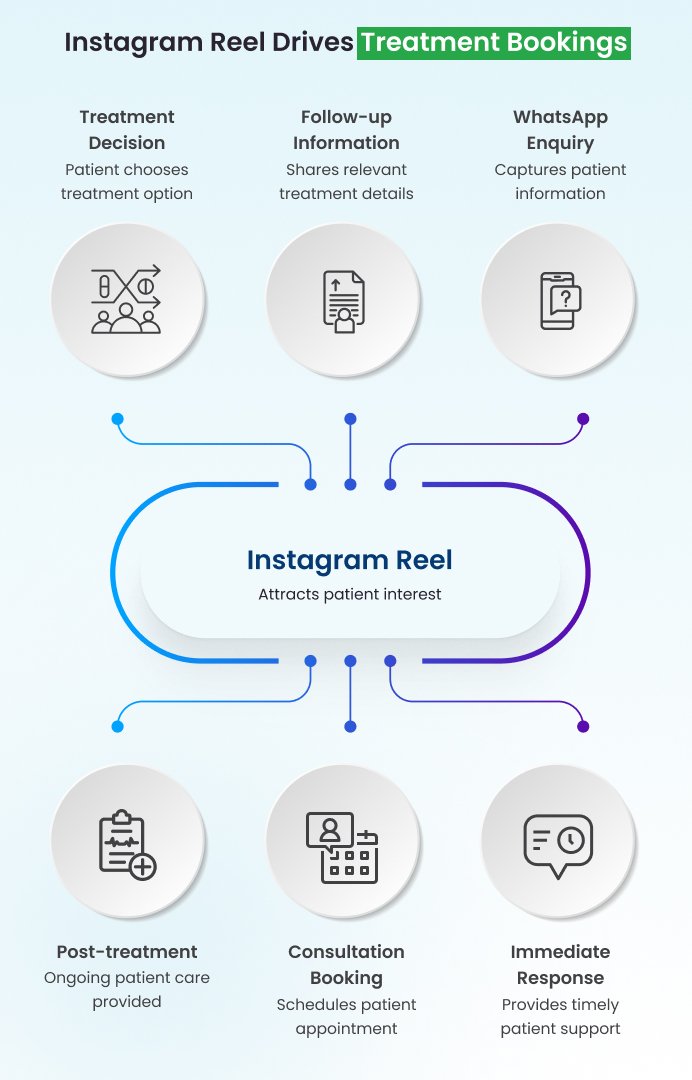
The patient may experience this as one conversation. Behind the scenes, multiple channels and systems work together; the real value of an omnichannel patient acquisition strategy is that channels may change, but the context should not be lost.
Key Takeaway: Connect every channel to the next action, not just to the next platform.
What Dermatology Practices Should Measure Across the Entire Journey
A connected patient journey also requires a connected way of measuring performance.
If a practice looks only at Instagram reach, Google traffic, or the number of leads generated, it may miss where patients are actually being lost. A channel can perform well on its own while the overall journey underperforms.
For example:
- If traffic is growing but inquiries aren’t, the website may not be converting interest into action.
- If inquiries are growing but consultations aren’t, look at lead quality, response time, follow-up, and booking friction.
- If consultations are growing but treatments aren’t, patients may need stronger decision support or post-consultation follow-up.
- If new patients are growing but repeat visits aren’t, acquisition may be working, but the retention journey needs attention.
Hence, dermatology practices should measure performance across three connected areas:
Acquisition Metrics
Acquisition metrics show whether marketing is creating relevant patient interest. Track search visibility, website and treatment-page engagement, social engagement, cross-channel inquiries, qualified inquiry rate, and patient acquisition cost.
Conversion Metrics
Conversion metrics show how effectively interest moves toward treatment. Focus on response time, inquiry-to-booking, consultation attendance, consultation-to-treatment conversion, and cost per appointment. This helps identify where patients progress and where they drop off. Measuring cosmetic surgery patients leads by quality and progression, not volume alone.
Retention Metrics
The journey continues after treatment. Track follow-up engagement, repeat patient and treatment rates, referrals, and patient lifetime value to understand whether first-time patients become long-term patients. Retention is not a separate activity—it is part of the same patient journey.
Measure Your Dermatology Practice Growth Journey with MedGrowthEngine.ai
MedGrowthEngine.aiCommon Omnichannel Gaps Dermatology Practices Should Avoid
An omnichannel strategy may look connected on paper but still feel disconnected to the patient. The biggest gaps often occur between channels, when information, context, or follow-up is lost as patients move between touchpoints.
- Strong Social Media, Weak Website Journey: High Instagram engagement can lose its value if patients are sent to a generic homepage. Each post or campaign should lead to relevant treatment information and a clear next step.
- Inquiries Without a Response System: Generating inquiries is only the beginning. Connect WhatsApp, calls, forms, and DMs so you capture inquiries, respond promptly, and move them toward booking.
- Losing Context Between Channels: Patients should not have to repeat their concerns at every touchpoint. A connected CRM should preserve relevant information so each interaction continues the conversation.
- Generic Follow-Up: It should reflect the patient’s interest and stage. Personalized, relevant communication works better than sending the same message to everyone.
- Stopping at Consultation: The patient journey continues beyond consultation. Tracking treatment decisions, follow-up, repeat visits, and referrals helps practices understand and improve long-term patient value.
Measuring Channels Instead of Patient Movement: Strong social engagement, website traffic, or inquiry volume does not guarantee more consultations or treatments. Practices should identify where patients enter, where they drop off, and what happens next.
Key takeaway: Omnichannel gaps usually happen between channels. Fix the hand-offs, not just the individual channels.
How to Build a Connected Patient Acquisition System
Building an omnichannel system is not about adding more platforms; it is about connecting the channels you already use so each interaction moves the patient forward. Map the journey from Google or Instagram to the website, WhatsApp or phone, CRM, follow-up, booking, consultation, treatment, and retention, ensuring every channel leads to the next relevant step.
Once a patient enquires, capture their source, treatment interest, response, booking, consultation, and follow-up status in a central CRM. Automate routine tasks such as acknowledgments, reminders, and follow-ups, while keeping complex questions and clinical decisions human-led.
Finally, measure the journey from source and inquiry through booking, consultation, treatment, and return to understand what drives conversion and where patients drop off.
Key takeaway: Build the system around the patient journey, not individual channels.
Conclusion
The modern dermatology patient journey spans multiple touchpoints, from Instagram and Google to the website, WhatsApp, consultation, treatment, and follow-up.
Search and social create discovery. The website builds confidence. WhatsApp and CRM support conversion. Follow-up drives decisions. Treatment builds experience. Retention creates long-term value.
The key shift is from measuring channels to measuring patient movement: Are the right patients finding you? Are inquiries handled quickly? Are they becoming consultations and treatments? Are patients returning and referring to others?
MedGrowthEngine.ai helps dermatology and aesthetic practices connect acquisition, communication, follow-up, and retention, so the entire patient journey becomes more measurable and growth-focused.
Frequently Asked Questions
Omnichannel patient acquisition connects channels such as Google, Instagram, websites, WhatsApp, phone, CRM, and follow-up so patients can move easily from discovery to inquiry, consultation, treatment, and retention.
Social media can create awareness and interest, but patient decisions often involve multiple touchpoints. A cosmetic clinic marketing agency can connect social media with the website, inquiry handling, booking, and follow-up, giving patient interest a clearer path toward consultations and treatments.
Practices can connect Google Search, social media, their website, WhatsApp, phone, CRM, paid advertising, and follow-up. Effective cosmetic clinic lead generation is not just about being present on more platforms; it is about ensuring these channels work together to move patients through the journey.
Measure the patient journey from discovery and inquiry to booking, consultation, treatment, and retention. This helps practices understand which channels drive qualified inquiries, where potential patients drop off, and how effectively their cosmetic clinic lead-generation efforts translate into consultations and long-term patient relationships.
AI and automation can handle routine tasks such as acknowledging inquiries, sending reminders, following up, tracking leads, and identifying patient-journey patterns. For practices focused on cosmetic clinic lead generation, these tools can help improve response speed and follow-up consistency while keeping complex patient questions and clinical decisions human-led.