





Jun 03/2026

The modern patient journey starts long before someone visits your hospital or clinic. It begins on a search engine, where people check symptoms, compare treatments, and choose who to trust with their health. For private clinics in India, this change in behavior offers a big opportunity. Smart clinic owners hire a strong healthcare SEO agency to plan to attract patients ready to book appointments.
To succeed, you need to understand how search engines work and also handle the unique details of the Indian market. Your approach should focus on being trustworthy and following rules as much as using the right keywords.
MedGrowthEngine.ai can give you a clear, practical plan to improve your online presence. Whether you want to learn how to attract more patients or improve your medical practice marketing, the following tips will help you create a steady way to get new patients.
What Is Healthcare SEO?
A healthcare SEO agency helps you optimize your medical practice’s online presence to rank higher in organic search results. Unlike paid ads, you can earn rankings through relevance, quality, and trust. When done right, it helps your clinic or hospital appear as a reliable source of answers to patient queries, increasing visibility and attracting patients actively searching for care.
Why Is It Important?
The importance of healthcare SEO lies in its ability to connect your clinic or hospital with patients at the exact moment they are searching for medical help. Higher organic visibility increases trust because patients often view top search results as more credible than paid advertisements. It also helps reduce dependence on paid marketing by generating consistent long-term traffic from search engines. Most importantly, a healthcare SEO agency improves your online reputation, strengthens local presence, and creates a steady flow of qualified patient inquiries that can lead to increased appointments and sustainable practice growth.
Difference Between General SEO and Healthcare SEO
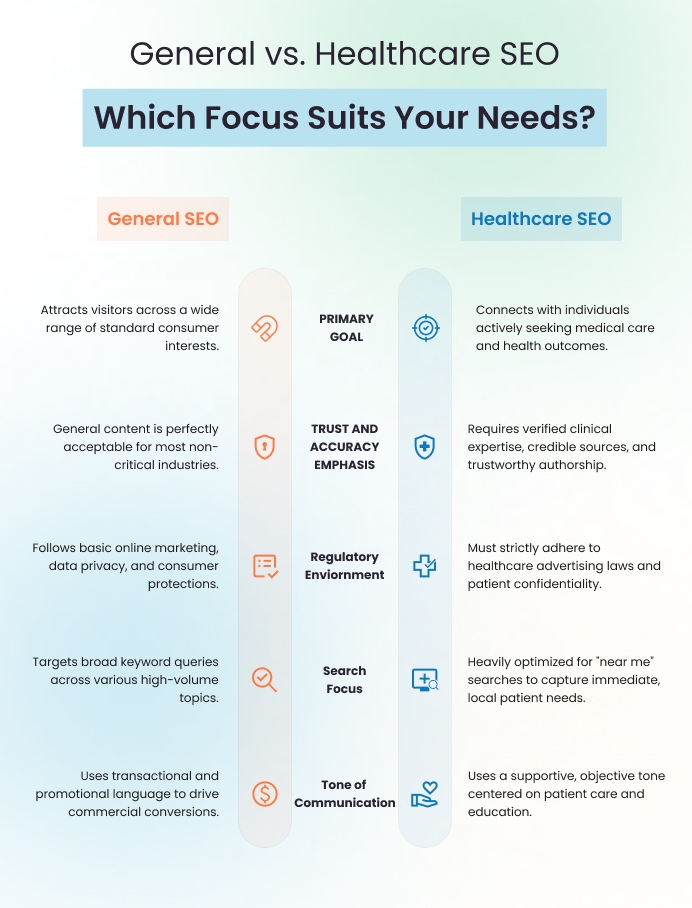
The difference between general SEO and healthcare SEO lies primarily in purpose, trust, and the governing rules. General SEO aims to attract visitors to a wide range of products and services. At the same time, a healthcare SEO agency focuses on people who are seriously seeking medical help, so accuracy and trustworthiness are especially important.
Healthcare content falls into a unique category because it can affect a person’s health or safety, so search engines prioritize content that shows clear expertise, reliable information, and verified author details. Also, healthcare SEO depends heavily on local searches to bring in patients through “near me” queries, follows stricter rules for medical advertising and privacy, and uses a helpful, caring tone rather than just trying to sell.
Struggling to apply these healthcare-specific SEO rules to your clinic? Get in touch with MedGrowthEngine.ai to start attracting patients actively searching for care.
Understanding Patient Search Intent
When we talk about patient search intent, we’re trying to understand why someone is looking up health information online.
Think about someone searching on Google. They might type “symptoms of diabetes” or “pediatrician near me.” These two searches clearly mean different things. If your practice can understand what people are actually looking for, it’s much easier to reach out to them effectively. And that usually leads to more people getting in touch and booking appointments.
People don’t all search for the same reasons, of course. Knowing the various reasons why they are searching can help you create content that really speaks to their needs.
Informational v/s Transactional Searches
Generally, there are two main types of searches: informational and transactional.
When someone is searching for information, they’re usually just doing some research. They might be looking up symptoms, checking out treatment options, or just seeking general health advice. For instance, if they type “early signs of diabetes”, it tells you they are just gathering facts about a possible condition; they are probably not ready to book an appointment right then. If you can keep an eye on these kinds of searches, you can put out helpful content like blog posts or FAQs, which are great for getting these people’s attention and teaching them something new.
On the other hand, transactional searches are when someone is actually ready to do something. They’re prepared to take action, like setting up an appointment or needing care right away. Searches such as “nephrologist near me” or “dentist appointment near me” indicate that someone wants to connect directly with a healthcare provider. This stage is super important for getting people actually to walk through your door.
Near Me and Location-Based Searches
Nowadays, many users use queries like “near me” and geo-based search terms to find information about clinics or hospitals. If someone searches for terms such as “clinic near me” or “best hospital in Ahmedabad,” search engines return information on nearby, relevant, and regularly updated places. Therefore, it is important that you maintain accurate information about your business, receive positive ratings, and create a Google Business Profile so potential patients can find you.
How Search Intent Impacts Patient Footfall
To convert website visitors into patients, it is essential to understand what they are looking for; This means that by using both informational and transactional searches, the organization can persuade patients to use its medical services. Informational searches help patients understand the clinic’s medical services, while transactional searches indicate their readiness to schedule an appointment.
Keyword Research for Healthcare SEO
Keyword research for healthcare SEO involves identifying the terms and questions patients use when searching online for treatments, symptoms, or services. By focusing on intent-driven, long-tail, and local keywords, healthcare providers can create relevant content that improves search rankings, attracts the right audience, and converts searches into patient appointments.
Identifying High-Intent Keywords
The foundation of effective SEO for your hospital website begins with thorough keyword research focused on what potential patients are actually searching for, such as “pediatrician near me” and “best skin specialist in Ahmedabad”.
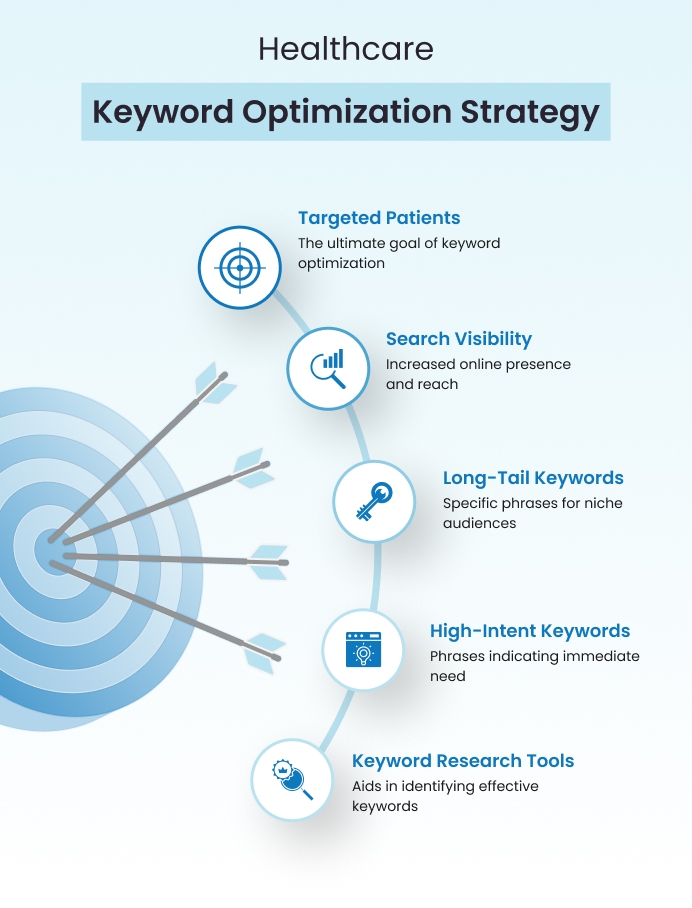
Identifying high-intent keywords includes a mix of short-tail and long-tail keywords to capture both broad and specific search intent, as well as location-based terms and even doctors’ names, to maximize visibility. Using tools like Google Keyword Planner helps identify relevant, high-volume healthcare keywords, ensuring your clinic or hospital appears in front of the right audience at the right time.
Long-Tail Keywords for Clinics and Hospitals
Long-tail keywords are several-word phrases; patients use them to understand the nature of their health issue or are seeking a particular treatment or physician at a healthcare facility. Although these terms may have lower search volume than others, they clearly reflect searchers’ intent. The likelihood that users will take some actions after using such long-tail terms is higher.
A typical search query on the topic of heart attack could be “early signs of heart attack in women,” or “best heart doctor for chest pain, Ahmedabad.” Such queries indicate a more specific, immediate need that hospitals and clinics can capitalize on by providing informative content related to those searches. SEMrush, Ahrefs, or even the Google Keyword planner may help hospitals and clinics to choose the most relevant long-tail keywords for their service offerings.
Tools for Healthcare Keyword Research
Tools for healthcare keyword research help identify what potential patients are searching for and how competitive those terms are. Platforms like Google Keyword Planner, SEMrush, and Ahrefs provide insights into search volume, keyword difficulty, and related queries, making it easier to target the right audience. Additionally, tools such as Google Search Console reveal the actual keywords driving traffic to your site. Using a combination of these tools allows healthcare providers to build a strong, data-driven keyword strategy that improves visibility and attracts qualified patient leads.
Local SEO Strategies to Increase Patient Footfall
Local SEO strategies help your clinic or hospital appear in search results when patients search for care in your area. By optimizing your local presence, you can attract high-intent patients who are more likely to visit or book an appointment, including:
Optimizing Google Business Profile
Your Google Business Profile, formerly known as Google My Business, is your clinic or hospital’s main online presence. It is usually the first thing patients notice before they visit your website.
To make your profile better, use your exact business name. Write a clear description with important keywords, such as “cosmetic dentist in Mumbai” or “clear aligners in Bangalore.” Pick the most accurate main and additional categories, such as Dental Clinic, Pediatric Dentist, or Cosmetic Dentist. Add clear, real photos of your team, clinic, signs, and treatment results. Doing these things can help your clinic show up higher in local searches and on maps, making it easier for new patients to find you.
NAP Consistency (Name, Address, Phone)
NAP, which stands for Name, Address, and Phone Number, is a crucial component of local SEO for healthcare, and it must remain 100% consistent across all platforms; it includes your website, your Google Business Profile, online directories such as Practo, Justdial, and Sulekha, and social media platforms such as Facebook and Instagram. Any inconsistency in this information can negatively impact your local search rankings and create confusion for both search engines and potential patients, ultimately affecting your visibility and patient footfall.
Local Listings and Directories
Local listings and directories play a crucial role in improving the online visibility of hospitals and clinics. Being listed on trusted platforms like Practo, Justdial, and Sulekha helps your practice appear in more search results and increases your chances of being discovered by potential patients. These platforms also strengthen your local SEO for healthcare by building consistent citations across the web, which search engines use to verify your credibility and relevance in a specific location.
Importance of Patient Reviews and Ratings
Patient reviews and ratings are one of the most influential factors in a patient’s decision-making process. Positive reviews not only build trust and credibility but also improve your rankings on platforms like Google Business Profile. When potential patients see consistent, high ratings and genuine feedback, they are more likely to choose your clinic or hospital over competitors—actively encouraging satisfied patients to leave reviews and responding professionally to feedback to drive more patient footfall.
On-Page SEO for Healthcare Websites
On-page SEO is the foundation of a high-performing healthcare website, ensuring that every page is optimized not only for search engines but also for real patients seeking reliable information and care. A well-structured on-page strategy improves visibility, enhances user experience, and ultimately drives more qualified patient inquiries.
Optimizing Service Pages
It is critical because these pages often drive conversions. Each service page should clearly explain the procedure, benefits, risks, eligibility, and expected outcomes in simple language. Including relevant keywords naturally, adding FAQs, and highlighting doctor expertise or patient outcomes can significantly improve both rankings and trust.
Title Tags, Meta Descriptions, and Headers
play a key role in how your pages appear in search results and how users interact with them. Clear, keyword-focused title tags and compelling meta descriptions improve click-through rates, while well-structured headers (H1, H2, H3) make content easier to read and help search engines understand the page hierarchy.
Internal Linking Strategy
helps guide both users and search engines through your website. Linking related blogs to service pages, and vice versa, improves navigation, distributes page authority, and keeps users engaged longer. For example, a blog post on weight loss can link to a bariatric surgery service page, creating a clear path to conversion.
Creating Patient-Centric Content
is at the heart of effective on-page SEO. Instead of writing solely for search engines, content should address patient concerns, answer common questions, and provide clear next steps. When your website speaks directly to patient needs in a simple, empathetic, and informative way, it builds trust—and trust is what ultimately drives patients to choose your services.
Technical SEO for Better Visibility
Technical SEO ensures your healthcare website is fast, secure, and easy for search engines to crawl and index. It plays a crucial role in improving visibility and user experience, and includes the following key elements :
Mobile Optimization
Most patients search for healthcare services on their mobile devices, and MedGrowthEngine.ai can help you fully optimize your website for mobile use. This means it should load in under three seconds, be easy to navigate, display properly on smaller screens, include a clickable phone number for quick “tap to call,” and clearly show your location for easy access. Search engines and busy patients favor fast, user-friendly websites, which directly improve the user experience and boost your rankings in mobile search results.
Website Speed and Performance
A fast-loading website is critical in healthcare, where users often need quick answers and immediate action. If your site takes more than a few seconds to load, potential patients are likely to leave and look elsewhere. Optimizing images, reducing unnecessary code, using caching, and choosing reliable hosting can significantly improve speed. Faster websites enhance the user experience and rank higher in search results, directly impacting patient acquisition.
Secure Website (HTTPS)
Security is a non-negotiable factor for a healthcare digital marketing agency, as patients may share sensitive personal information. MedGrwothEngine.ai implements HTTPS, ensuring that data exchanged between the user and your website is encrypted and protected. Search engines also prioritize secure websites, and users are more likely to trust and engage with sites that clearly indicate they are safe. A secure website builds credibility and is essential for both compliance and SEO performance.
Schema Markup for Healthcare
Schema markup is a form of structured data that helps search engines better understand your website content. For healthcare providers, implementing a schema for services, doctors, reviews, and location details can enhance how your site appears in search results, such as rich snippets. It helps you improve visibility and click-through rates by providing users with more relevant information upfront, ultimately making it easier for patients to find and choose your services.
Make your clinic the obvious choice. Optimize your local presence today.
Book Your SEO Audit TodayContent Marketing for Patient Acquisition
Content marketing helps healthcare providers connect with patients exactly when they need answers. By sharing helpful, easy-to-understand information, clinics can attract new patients without relying solely on ads. Maintaining a consistent content schedule improves search rankings and builds trust, both of which are important when people choose a healthcare SEO agency.
Blogging for Healthcare Topics
Blogging is a key part of this approach. Writing blogs about common symptoms, treatments, procedures, and patient care helps clinics appear higher in search results and reach people ready to take action. These blogs showcase your clinic’s knowledge and encourage patients to contact you.
Educational Content to Build Trust
Educational Content to Build Trust. Explaining medical topics in simple, easy-to-read ways helps build trust. Sharing guides, explanations of conditions, or prevention tips demonstrates that your clinic is a trustworthy source. When people better understand their health, they feel more confident in choosing your services.
FAQs and Voice Search Optimization
People often search by asking questions, especially using voice assistants. Organizing content with clear, conversational FAQs directly answers these questions. It increases your chances of showing up in featured snippets and voice search results, improving visibility and making it easier for patients to find and trust you.
Tracking and Measuring SEO Performance
Tracking and measuring SEO performance is essential to ensure your healthcare marketing efforts are actually driving patient growth. Without clear data, it is impossible to know what’s working, what needs improvement, and where opportunities are being missed. By consistently monitoring performance, clinics and hospitals can make informed decisions that lead to better visibility, higher engagement, and increased patient conversions, and with the right guidance from MedGrowthEngine.ai, turning these insights into consistent patient growth becomes much more achievable.
Key Metrics (Traffic, Rankings, Conversions)
It provides a clear picture of your SEO success. Website traffic shows how many users are discovering your content, while keyword rankings indicate how well your pages are performing on search engines. Most importantly, conversions—such as appointment bookings, form submissions, or calls—reveal whether your traffic is turning into actual patients.
Tools like Google Analytics and Google Search Console
Using tools like Google Analytics and Google Search Console makes this process more effective and data-driven. Google Analytics helps track user behavior, traffic sources, and conversion paths, while Google Search Console provides insights into search performance, keyword visibility, and technical issues affecting your site.
Continuous Optimization Strategies
It ensures long-term success. SEO is not a one-time effort but an ongoing process that involves updating content, improving page speed, refining keywords, and enhancing user experience. By regularly analyzing data and making adjustments, healthcare providers can stay competitive, improve rankings, and consistently attract and convert new patients.
Common Healthcare SEO Mistakes to Avoid
Healthcare SEO plays a critical role in patient acquisition, but common mistakes can reduce visibility and erode trust. Avoiding these errors is essential to attract consistent, high-quality patient inquiries and maintain a strong digital presence.
Ignoring Local SEO
Ignoring local SEO is a common and expensive mistake. Most patients look for services “near me,” so not improving your Google Business profile, local keywords, and location pages can cause you to lose visitors. Without a strong local presence, people may not find your services.
Keyword Stuffing
This old method is harmful. Using too many keywords makes content hard to read and can lead to penalties from search engines. Today’s SEO focuses on natural, easy-to-read content that answers real patient questions instead of trying to trick rankings.
Poor Mobile Experience
A poor mobile experience can quickly drive patients away. Since most healthcare searches happen on mobile devices, a slow or hard-to-use website makes visitors leave. A fast, easy-to-use mobile design is important for both visitors and search rankings. Also, old information can hurt your trust and lower your rankings over time. Regularly updating blogs, service pages, and medical details shows search engines and patients that your practice is active, trustworthy, and provides accurate, up-to-date information.
Future Trends in Healthcare SEO
Healthcare SEO marketing agency is evolving rapidly as technology and patient behavior continue to change. To stay competitive, clinics and hospitals must adapt to emerging trends that shape how patients search for and choose healthcare providers. Understanding these future trends can help build a more resilient and forward-thinking digital strategy.
Voice Search and AI in Healthcare
Voice assistants and AI-driven tools are transforming how users find information. Patients increasingly search using conversational, question-based formats. MedGrowthEngine.ai optimizes healthcare content for natural language, long-tail keywords, and clear, direct answers. As AI improves search accuracy, providing high-quality, relevant, and trustworthy content is more important than ever.
Personalized Search Results
are becoming more prominent, with search engines Personalized search results are becoming more prominent as search engines tailor results based on user behavior, location, search history, and preferences. As a result, users may see different results for the same query. Healthcare providers should create targeted, patient-centric content for different audience segments to improve engagement and increase conversion rates.
Growing Importance of Local Search
Most decisions by a healthcare SEO agency are location-based, and search engines prioritize nearby, highly rated, and well-optimized providers. Maintaining accurate business listings, encouraging patient reviews, and optimizing for local keywords are essential steps to staying visible. As competition increases, a strong local SEO strategy will be a key differentiator in attracting and retaining patients.
Conclusion
In today’s digital-first world, onboarding a healthcare SEO agency is no longer optional; it is essential for hospitals and clinics looking to grow consistently. From understanding patient search intent and targeting the right keywords to optimizing your website, creating valuable content, and strengthening your local presence, every element works together to attract and convert potential patients. If you are looking to implement this effectively, MedGrowthEngine.ai can help you turn these strategies into measurable results.
By avoiding common mistakes, leveraging the right tools, and continuously improving your strategy, healthcare providers can build trust, improve visibility, and drive steady patient footfall. With the right partner like MedGrowthEngine.ai, this process becomes more structured and effective, helping you turn your online presence into a reliable system for sustainable patient acquisition and long-term practice growth.
Frequently Asked Questions
Healthcare SEO is the process of optimizing your website and online presence to rank higher in search results, making it easier for potential patients to find your services. It is important because most patient journeys begin online, and higher visibility leads to increased trust, more website traffic, and ultimately more appointments.
A healthcare SEO agency can help your clinic show up in local searches, like “near me” results, so people nearby can find your services more easily. When you optimize your Google Business Profile, keep your contact details up to date, and encourage patient reviews, your clinic becomes more visible and attracts more local patients.
Patient-focused content, such as blogs, educational guides, FAQs, and service pages, works best. Content that answers common patient questions, explains treatments clearly, and builds trust not only improves rankings but also encourages patients to choose your clinic.
A healthcare digital marketing agency provides a long-term strategy, and results typically take 3 to 6 months to become noticeable. However, with consistent optimization, high-quality content, and proper tracking, it can deliver sustainable patient growth and long-term visibility compared to paid advertising. With MedGrowthEngine.ai, you can accelerate this process with a structured, performance-driven approach tailored for healthcare providers.