





Aug 14/2026

The orthopedic healthcare sector in India has evolved significantly. Hospitals and clinics can no longer depend solely on physician referrals, hospital networks, or word of mouth to attract patients. More patients now search online for orthopedic specialists, compare hospitals, read reviews, and research treatment options before scheduling appointments.
This shift makes orthopedic marketing analysis essential for understanding patient behavior, identifying high-performing service lines, and optimizing marketing investments.
However, not all orthopedic services should be marketed in the same way. At MedGrowthEngine.ai, we help orthopedic hospitals and clinics use data-driven marketing insights to identify high-growth service lines, optimize marketing investments, and improve patient acquisition
Patients with sports injuries have different needs and decision-making processes than those considering knee replacement or chronic spine treatment. Some services attract high patient volumes, while others generate higher revenue despite fewer cases.
To maximize marketing ROI, orthopedic practices need a data-driven marketing strategy for orthopedic clinics that aligns marketing investments with organizational goals. An effective orthopedic marketing analysis identifies which service lines drive patient volume, which generate the highest revenue, and where marketing budgets will yield the greatest return. This guide explains how to use these insights to allocate your marketing budget for long-term growth.
The High-Volume Drivers: General Orthopedics & Emergency Care
To build a thriving orthopedic practice, you need a steady, predictable influx of new patients. The fastest way to achieve this is by targeting high-intent, immediate-need scenarios. While these patients may not always require major surgery upfront, they represent the front-of-funnel volume that keeps your clinic busy and feeds your downstream surgical pipeline.
Walk-In Orthopedic Emergency Care
Traditional emergency room visits are expensive, time-consuming, and stressful for patients with acute musculoskeletal injuries. By positioning your clinic’s emergency care services as the premier alternative, you capture patients at the exact moment of injury.
- The Patient Profile: Parents of youth athletes with sudden injuries, adults with weekend warrior mishaps, or workers with acute on-the-job strains.
- Why It Works: It offers an incredibly high conversion rate. When someone searches for immediate pain relief, they are not browsing or comparing options for weeks – they are booking an appointment or driving to your clinic right now.
- Downstream Value: A patient who presents with an acute ankle sprain may later require physical therapy, custom orthotics, or advanced imaging (MRI), thereby keeping revenue within your practice system.
Sports Medicine: Engaging the Active and Community-Minded Audience
Sports medicine is the ultimate brand-builder for an orthopedic clinic. It allows you to market to an active demographic that highly values mobility and fast recovery times.
- The Patient Profile: High school and collegiate athletes, marathon runners, crossfitters, and aging adults determined to stay active.
- The Marketing Hook: Focus on “getting back in the game.” Content should center around injury prevention, minimally invasive treatments, and rapid rehabilitation.
- Community Integration: Partnering with local schools and local fitness events creates a powerful organic referral network that complements your digital efforts.
Marketing Playbook: Orthopedic Digital Marketing Strategies for High-Volume Services
Because these services rely on immediacy and local proximity, your marketing mix needs to be highly reactive.
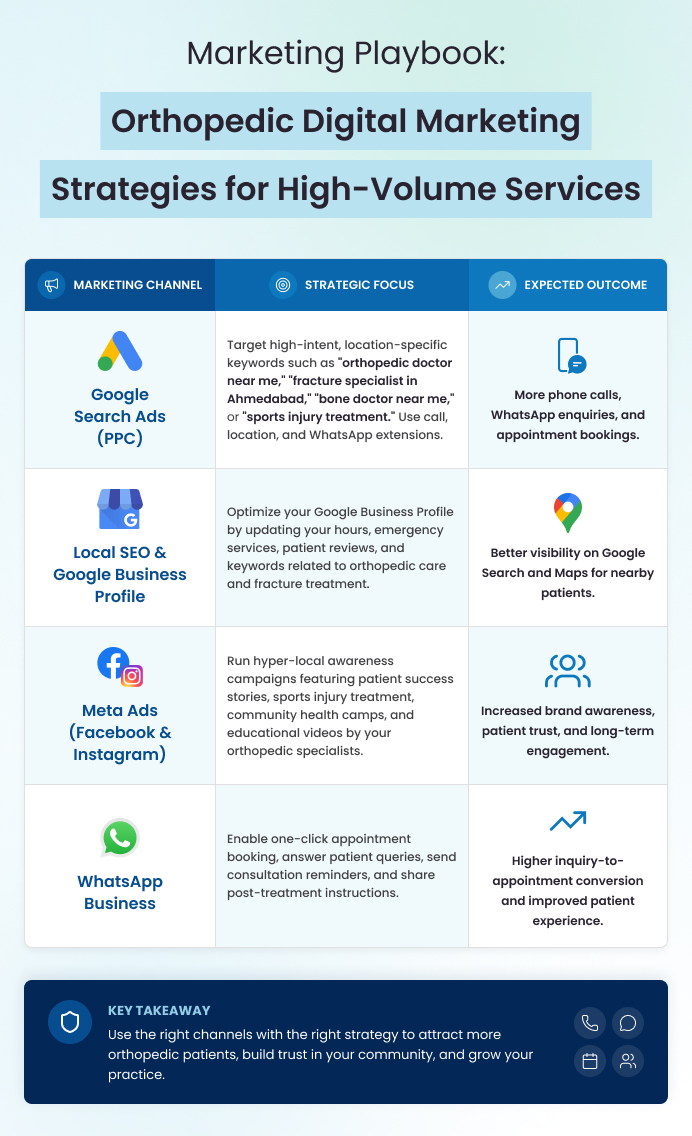
Key Takeaway for Volume: High-volume services have a lower Customer Acquisition Cost (CAC) compared to major surgeries. They act as the welcoming front door to your practice, establishing trust early so that when these patients (or their families) need major care down the road, your clinic is their only choice.
Marketing Your Most Profitable Orthopedic Procedures
Major orthopedic surgeries often represent the highest-value service lines for orthopedic clinics. While these procedures typically generate significant revenue, they also entail longer patient decision-making journeys, greater competition, and more extensive trust-building requirements. Patients rarely schedule surgery after seeing a single advertisement; they spend weeks researching treatment options, comparing surgeons, reading reviews, and understanding recovery expectations.
For this reason, marketing your orthopedic services requires a strategy focused on education, credibility, and patient outcomes rather than direct promotion.
Strategies to Grow Your Knee & Hip Replacement Practice
Knee and hip replacement surgeries are among the most in-demand—and most competitive—orthopedic services. Patients often compare hospitals and surgeons based on expertise, technology, outcomes, rehabilitation support, and patient reviews.
Successful marketing focuses on the patient’s journey from chronic pain to improved mobility rather than just the procedure. Educational content on recovery, implant lifespan, costs, risks, and outcomes helps build trust and encourages consultation bookings.
How to Position Robotic Surgery as a Patient Benefit
Advanced surgical technologies, such as robotic-assisted and minimally invasive procedures, can differentiate your orthopedic practice. Instead of highlighting the technology itself, focus on patient benefits such as greater precision, less pain, faster recovery, and personalized treatment. When communicated accurately, these innovations strengthen your reputation for delivering modern, patient-centered care.
Growing Your Spine Care Program with Patient-Centric Marketing
Back pain is a major reason patients seek orthopedic care, making spine services a key growth area. Since many patients are hesitant about surgery, marketing should emphasize comprehensive evaluation and personalized treatment, including conservative care, pain management, physiotherapy, and surgery only when necessary.
Educational content on the causes of back pain, treatment options, and when surgery is appropriate helps build trust and reassure patients.
Marketing Playbook: How to Attract More Surgical Patients
High-value orthopedic procedures require patient education, not just promotion. Build trust throughout the decision-making journey with:
- Dedicated landing pages explaining conditions, procedures, recovery, FAQs, and appointment options.
- Educational blogs and guides that answer common patient questions and improve SEO.
- Patient testimonial videos showcase real recovery stories to build credibility and reduce anxiety.
Combine high-intent SEO, educational content, and authentic patient testimonials to attract qualified surgical patients and build trust before the first consultation.
Maximizing Downstream Revenue: Ancillary Services
While getting a patient through the door for an initial consultation or a successful surgery is a major win, the financial health of a modern orthopedic clinic relies heavily on what happens after that first visit. It is where ancillary services come in.
Marketing these internal service lines ensures that your practice captures the full continuum of musculoskeletal (MSK) care, significantly increasing your Patient Lifetime Value (LPV) without requiring you to acquire new leads.
Physical Therapy & Rehabilitation: The Bridge to Long-Term Retention
Physical therapy (PT) is the natural extension of almost every orthopedic intervention—whether it’s post-surgical rehabilitation or conservative management for chronic pain.
- The Marketing Shift: Instead of letting patients take a prescription pad to an external, competing PT clinic, your marketing should position your internal therapy team as a seamless extension of the surgical team.
- The Messaging Hook: Focus on “continuity of care.” Emphasize that your physical therapists work hand in hand with your surgeons, sharing the same medical records and recovery philosophies to ensure a faster, safer return to daily activities.
- Internal Marketing: Utilize email automated workflows. When a patient is booked for surgery, an automated email sequence should introduce them to their post-op physical therapy team and outline their rehabilitation journey.
In-House Imaging (MRI/X-Ray) & Durable Medical Equipment
Convenience is one of the most powerful drivers of conversion in modern healthcare. Patients do not want to drive across town to a third-party imaging center or a medical supply store to get what they need.
- Marketing the One-Stop-Shop Experience: Highlight your clinic’s comprehensive, under-one-roof capabilities in your primary website copy and landing pages.
- The Value Proposition: Use phrases like “Same-day imaging and bracing” or “From diagnosis to treatment in a single visit.” It directly addresses a major patient pain point: time wasted waiting for external diagnostic approvals and scheduling.
Marketing Playbook: Keeping Care Inside Your Ecosystem
Marketing ancillary services requires a mix of internal patient education and strategic digital touchpoints.
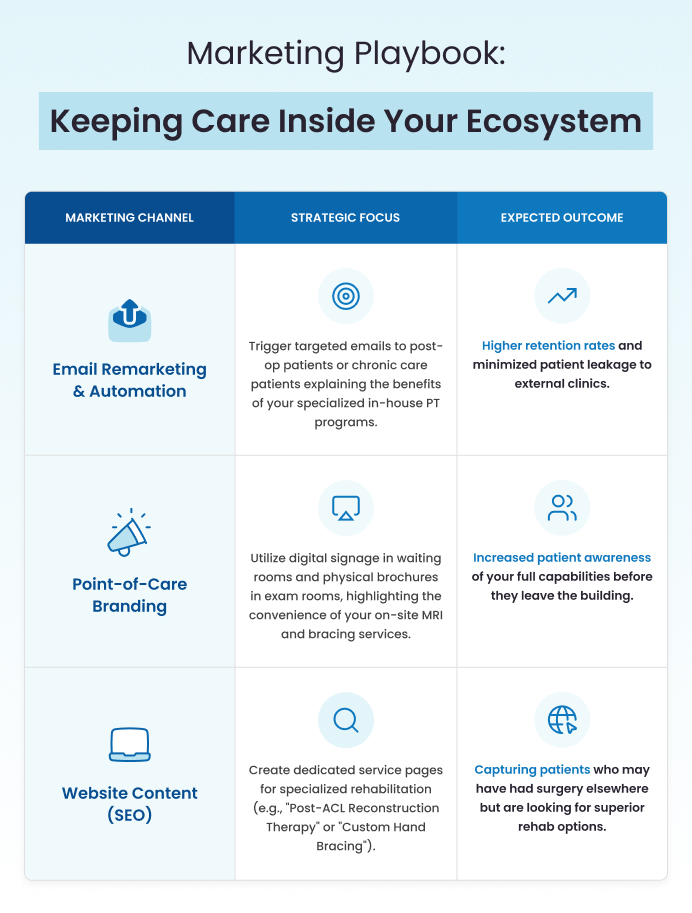
The Financial Impact: Ancillary services smooth out the financial unpredictability of a surgical practice. While surgeries fluctuate with hospital schedules or seasonal deductibles, physical therapy and imaging provide steady, predictable, high-margin monthly revenue that maximizes the value of every patient you acquire.
Analyzing the Data: Patient Acquisition Cost (PAC) vs. Patient Lifetime Value (PLV)
When evaluating the success of your orthopedic marketing efforts, metrics like website traffic, impressions, or even the number of inquiries only tell part of the story. The true measure of a profitable marketing strategy lies in understanding Patient Acquisition Cost (PAC) and Patient Lifetime Value (PLV).
MedGrowthEngine.ai helps orthopedic practices measure PAC Patient Lifetime and marketing ROI, enabling hospitals to make informed decisions about budget allocation and service-line growth.
Understanding the Metrics
Before allocating your marketing budget, it is important to understand what these numbers represent in an orthopedic practice.
Patient Acquisition Cost (PAC)
Patient Acquisition Cost is the total amount spent to acquire one new patient; this includes Google Ads, Meta advertising, SEO, content marketing, agency fees, website maintenance, and other promotional expenses.
Formula:
PAC = Total Marketing Spend ÷ Number of New Patients Acquired
Patient Lifetime Value (PLV)
Patient Lifetime Value is the total revenue generated from a patient throughout their relationship with your hospital or clinic. In India, this often extends well beyond the initial consultation and may include:
- Specialist consultations
- X-rays, MRI, CT scans, and other diagnostics
- Physiotherapy sessions
- Joint injections
- Surgical procedures
- Hospital admission charges
- Follow-up consultations
- Orthopedic braces and support devices
- Future treatments for other joints or family referrals
The longer a patient remains within your healthcare ecosystem, the higher their lifetime value becomes.
Comparing Different Orthopedic Service Lines
Every orthopedic specialty attracts patients differently. Some services generate high patient volumes with lower revenue per case, while others require greater marketing investment but deliver significantly higher returns.
| Orthopedic Service | Typical Patient Acquisition Cost (India) | Typical Patient Lifetime Value | Strategic Importance |
|---|---|---|---|
| Walk-in Orthopedic & Fracture Care | ₹800–₹2,500 | ₹5,000–₹20,000 | Generates consistent patient volume and introduces new patients to the practice. |
| Sports Injury & Arthroscopy | ₹1,500–₹4,000 | ₹20,000–₹1,20,000+ | Builds long-term patient relationships through rehabilitation, repeat consultations, and surgical care when required. |
| Knee & Hip Replacement | ₹4,000–₹12,000+ | ₹2 lakh–₹8 lakh+ | High-value procedures that significantly contribute to hospital revenue despite higher acquisition costs. |
| Spine Surgery & Chronic Back Pain | ₹5,000–₹15,000+ | ₹2 lakh–₹10 lakh+ | Highly competitive segment requiring longer decision-making cycles but offering substantial long-term revenue. |
Note: Figures are indicative and may vary depending on city, competition, hospital brand, and marketing channels.
Understanding which orthopedic services for patient growth deliver the highest patient volume and lifetime value allows clinics to prioritize their marketing investments effectively
Balancing Immediate Revenue with Long-Term Growth
An effective orthopedic marketing strategy should balance services that generate immediate patient flow with those that drive long-term profitability.
For example, focusing exclusively on knee replacement or spine surgery may increase your marketing costs because these patients typically spend weeks or even months researching surgeons, comparing hospitals, and seeking second opinions.
On the other hand, marketing only fracture care or walk-in orthopedic consultations can keep your OPD busy. Still, it may limit overall revenue if patients are not retained for diagnostics, rehabilitation, or surgery.
The most successful orthopedic hospitals treat these service lines as interconnected parts of a single patient journey.
Generate Consistent Patient Flow
Invest in lower-cost acquisition channels such as:
- Google Business Profile optimization
- Local SEO
- High-intent Google Search campaigns
- Location-based advertising
These channels help attract patients actively searching for orthopedic care in your city and provide a steady stream of new consultations.
Invest in High-Value Surgical Campaigns
Allocate a dedicated portion of your marketing budget to educate patients considering major procedures.
Effective campaigns include:
- Patient success stories and testimonials
- Videos explaining robotic joint replacement
- Educational blogs on arthritis and spine disorders
- Webinars and awareness campaigns
- Downloadable treatment guides
Since patients considering surgery often take several months to decide, consistent educational marketing helps build trust before they choose your hospital.
Maximize Patient Lifetime Value
Acquiring a patient is only the beginning.
The real return comes from ensuring patients continue receiving care within your hospital through:
- In-house physiotherapy
- Diagnostic imaging services
- Pain management clinics
- Follow-up consultations
- Preventive orthopedic health packages
- Rehabilitation programmes
Reducing patient leakage to external diagnostic centers or physiotherapy clinics significantly improves overall profitability without increasing marketing spend.
The Ideal PAC-to-PLV Ratio
A healthy benchmark for healthcare marketing is maintaining a Patient Lifetime Value (PLV) to Patient Acquisition Cost (PAC) ratio of at least 5:1. In simple terms, if your hospital spends ₹5,000 to acquire a patient, that patient should ideally generate ₹25,000 or more in total revenue over their treatment journey.
Regularly tracking PAC and PLV helps orthopedic practices optimize marketing budgets, improve patient retention, and invest in service lines that drive long-term, sustainable growth.
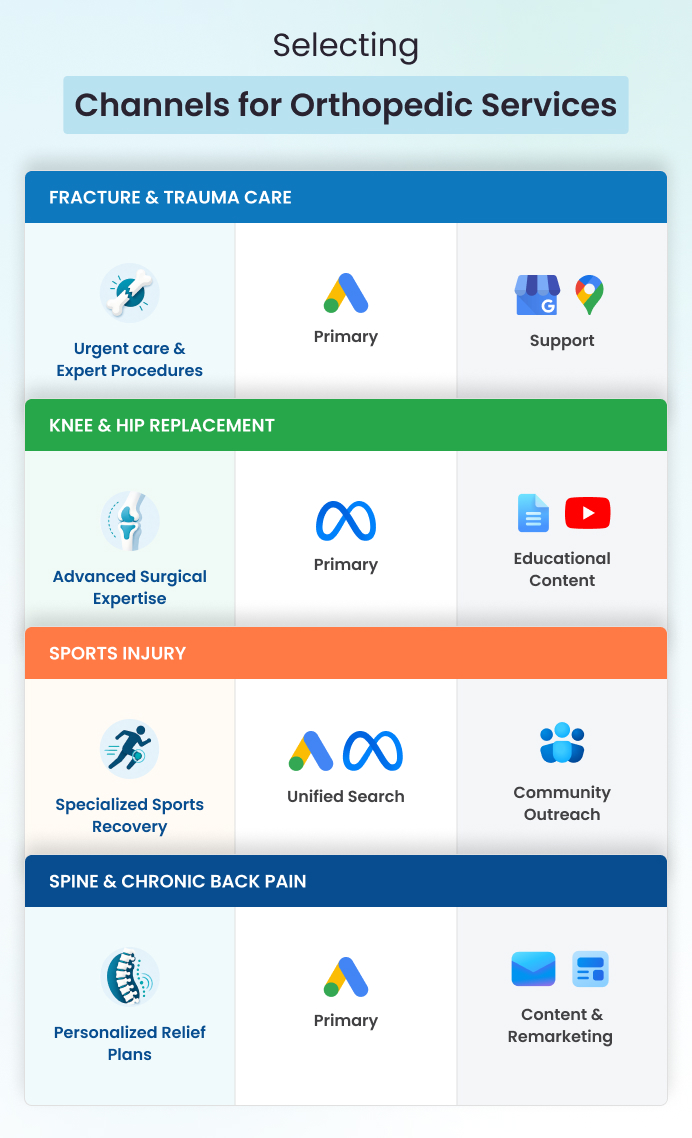
The most effective orthopedic digital marketing campaigns align each service line with the right marketing channel. Whether your goal is to promote fracture care, sports medicine, or joint replacement, selecting the appropriate platform can improve visibility, patient engagement, and conversions.
Multi-Channel Strategies to Grow Your Key Orthopedic Services
A successful orthopedic digital marketing strategy isn’t about using every marketing channel—it’s about using the right channel for the right service line. Patients searching for a fracture specialist behave very differently from someone considering knee replacement surgery after years of chronic pain.
Aligning your marketing channels with patient intent helps improve conversions while maximizing your marketing ROI.
Google Ads vs. Meta (Facebook & Instagram) Ads
Instead of choosing one platform over the other, use both strategically based on where patients are in their decision-making journey.
Google Ads: Capture High-Intent Patients
Google Search Ads work best when patients are actively looking for orthopedic care.
Best suited for:
- Fracture & trauma care
- Sports injuries
- Acute joint pain
- Same-day orthopedic consultations
Strategy:
Target location-specific, high-intent keywords such as “orthopedic doctor near me,” “knee pain specialist in Ahmedabad,” or “best orthopedic surgeon for fracture.” Direct users to landing pages with prominent Call Now, WhatsApp, and Book Appointment options.
Meta Ads: Build Trust Before the Decision
Patients considering knee replacement, hip replacement, or spine surgery often spend weeks or months researching treatment options. Meta platforms help educate and nurture these patients before they are ready to book a consultation.
Best suited for:
- Knee & hip replacement
- Robotic joint replacement
- Spine care
- Arthritis treatment
Strategy:
Use educational videos, surgeon interviews, patient testimonials, and success stories that demonstrate improved mobility and quality of life after treatment.
Strengthening Your Doctor Referral Network
While digital marketing attracts patients directly, referrals from general physicians, physiotherapists, sports medicine specialists, and other healthcare providers remain an important source of orthopedic patients in India.
To strengthen these relationships:
- Share regular updates about your specialized services and technology.
- Provide quick appointment access for referred patients.
- Make referrals seamless through dedicated contact numbers, WhatsApp support, or online referral forms.
A fast and hassle-free referral process encourages doctors to recommend your hospital more consistently.
Online Reputation Matters More Than Ever
Before booking an appointment, most patients compare hospitals by reading online reviews.
Even an excellent marketing campaign can lose potential patients if your Google rating is poor or your reviews are outdated.
Encourage satisfied patients to leave reviews after successful treatment or physiotherapy, and respond to patient feedback regularly. Highlight your surgeons’ expertise through updated profiles on Google Business Profile, Practo, and other trusted healthcare platforms to build credibility.
Key Takeaway
Successful orthopedic hospitals combine Google Ads for immediate patient acquisition with Meta, SEO, and educational content to build trust and nurture elective surgery patients. This multi-channel approach ensures a steady pipeline of both high-volume and high-value patients while reducing reliance on any single lead source.
Conclusion & Next Steps
Growing a successful orthopedic practice isn’t just about attracting more patients; it is about implementing orthopedic practice growth marketing strategies that bring in the right patients, improve retention, and maximize lifetime value. Regular orthopedic marketing analysis ensures your marketing investments continue to support sustainable growth.
Whether you are looking to increase patient volume, improve surgical conversions, or maximize marketing ROI, MedGrowthEngine.ai provides data-driven orthopedic marketing strategies that support sustainable practice growth.
3-Step Marketing Audit
1. Calculate Your PAC
Measure how much you’re spending to acquire a patient for each service line.
2. Improve Patient Retention
Track how many patients stay within your hospital for diagnostics, physiotherapy, and follow-up care, and reduce patient leakage.
3. Optimize Your Marketing Budget
Allocate more budget to services with higher growth potential and available capacity, using targeted campaigns on Google and Meta.
Key Takeaway: Balance high-volume consultations with high-value procedures to build a steady, profitable patient pipeline for long-term growth.
Frequently Asked Questions
Marketing analysis is the process of evaluating how different marketing channels, campaigns, and service lines contribute to patient acquisition, conversions, and revenue. It helps orthopedic clinics identify which services attract the most patients and where to invest their marketing budget for the highest return.
High-demand services often include knee and hip replacements, sports injury treatment, spine care, fracture management, physiotherapy, and joint pain management. However, the most profitable services for a clinic depend on its location, patient demographics, competition, and clinical expertise.
MedGrowthEngine.ai can track key metrics for your hospital, including website traffic, search rankings, appointment requests, phone calls, referral sources, cost per lead, conversion rates, and revenue generated by each service. Tools like Google Analytics, Google Search Console, CRM software, and call tracking systems provide valuable insights.
Most patients begin their healthcare journey online by searching for symptoms, treatments, or nearby specialists. A well-optimized website with educational service pages, informative blogs, and location-specific content helps orthopedic clinics improve search visibility, attract qualified patients, and build trust before the first consultation.
Marketing performance should be reviewed at least once a month, with a more comprehensive analysis conducted quarterly. Regular reviews help identify shifts in patient demand, optimize marketing campaigns, improve ROI, and adjust strategies in response to seasonal trends and competitive changes.