

Every day, hundreds of potential patients visit healthcare websites, scroll through social media pages, or click on online ads, and most of them leave without booking an appointment. Not because healthcare services aren’t good, but because somewhere along the digital journey, the patient’s interest falls through the cracks.
This is the hidden reality most healthcare brands face. Healthcare providers and markets do invest in campaigns, post regularly on social media, or run paid ads, but without a clear view of where patients disengage, even the best marketing strategies can fail.
A Healthcare Growth Audit is the solution.
Healthcare growth audit is a comprehensive check-up for your digital patient journey. From website visits to social media interactions, paid campaigns to follow-up sequences, a growth audit identifies exactly where patients drop off and why, providing actionable insights to plug the leaks and maximize conversions.
In this blog, we’ll take you inside a Healthcare Growth Audit. You’ll learn:
- Where patient enquiries most often drop in the digital funnel.
- Strategic insights that reveal gaps in patient acquisition and engagement.
- Actionable recommendations and examples to optimize every touchpoint.
By the end, you’ll understand how a growth audit can turn lost opportunities into predictable patient growth, helping your healthcare brand capture more high-intent leads and maximize ROI from every digital channel.
Understanding the Digital Patient Journey
The way patients discover, evaluate, and choose healthcare services has changed dramatically over the past decade. Gone are the days when word-of-mouth or a simple clinic signboard was enough to bring patients through the door. Today, the journey begins online, from searching symptoms on Google to reading reviews, comparing providers, and interacting with digital campaigns.
This shift has created what we call the Digital Patient Journey. This method is measurable, trackable, and, most importantly, influenced at multiple touchpoints across the digital ecosystem. Every interaction a patient has online forms a part of the digital journey.
Here are the critical touchpoints healthcare brands must optimize:
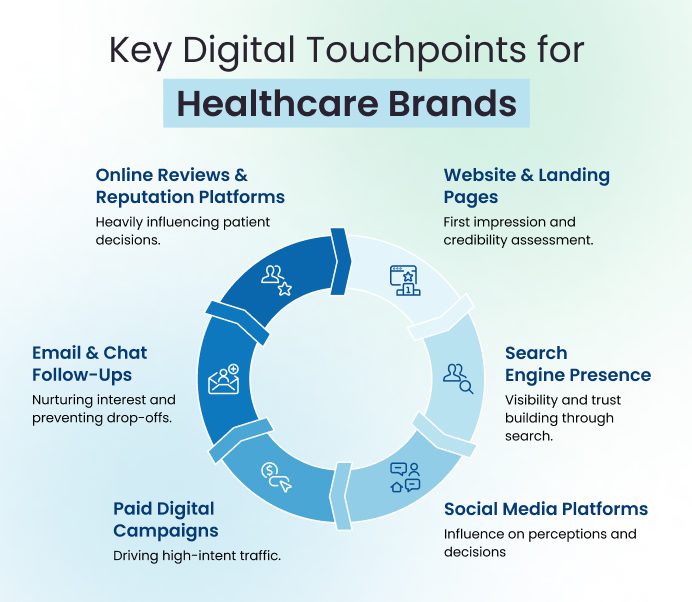
Each touchpoint is a strategic opportunity to engage, educate, and guide the patient toward booking an appointment. Missing even one link in this chain can lead to significant drop-offs in enquiries and conversions.
The goal of this digital patient journey is to:
- Capture attention and communicate credibility.
- Address questions or doubts immediately.
- Maintain engagement and build trust.
- Prompt timely action that leads to appointment bookings.
By strategically mapping and optimizing these digital touchpoints, healthcare brands can reduce leakage in the patient funnel, improve conversions, and ensure marketing investments deliver measurable returns.
Where Patient Enquiries Drop: Common Digital Pain Points
Even the most well-planned digital strategies can fail to convert potential patients into booked appointments. The reason is the gaps and friction points within the digital patient journey. Patients today have numerous options and little patience, so if they encounter a poor experience, slow response, or confusing messaging, they leave, often silently.
A Healthcare Growth Audit helps uncover exactly where these drop-offs happen. Across the digital patient journey, certain touchpoints consistently show higher dropout rates.
Let’s break down the most common pain points.
Website & Landing Pages
Your website is often the first impression a potential patient has of your brand. If it’s slow, cluttered, or confusing, patients are unlikely to proceed further.
Common issues include:
- Complicated navigation or hidden information.
- Forms that are long, unclear, or fail to capture leads effectively.
- Lack of a clear call-to-action (CTA) prompting patients to book.
A high-performing website should instantly communicate trust, clarity, and ease of action, guiding patients seamlessly from curiosity to engagement.
Social Media Engagement
Social media is a new and the most important patient touchpoint. Patients often research providers, read reviews, and gauge credibility through social engagement.
Problems arise when:
- Content lacks relevance or consistency.
- Patient queries go unanswered, or responses are delayed.
- Campaigns do not align with the broader patient journey.
Without strategic engagement, social media efforts may generate awareness but fail to convert into real enquiries.
Paid Campaigns & Ad Funnels
Paid campaigns can bring high-intent traffic, but only if the funnel is optimized.
Common pitfalls include:
- Ads that drive traffic to irrelevant or generic pages.
- Inconsistent messaging between ads and landing pages.
- Lack of retargeting or follow-up for users who don’t convert immediately.
Even with significant ad spend, poor funnel design leads to wasted clicks and missed opportunities.
Follow-up & Lead Nurturing Gaps
Many potential patients drop off after the initial interaction due to inadequate follow-up.
Typical gaps include:
- Slow response times to online enquiries.
- Generic follow-up messages that don’t address patient concerns.
- No automated nurturing system to keep leads engaged until they’re ready to book.
An effective follow-up strategy ensures no high-intent lead slips through the cracks, turning initial interest into confirmed appointments.
Identifying these pain points is crucial for healthcare brands to stop leaks in the patient funnel. The next step is to move from observing the problem to strategic insights and making informed decisions to optimize the digital journey for maximum patient engagement.

Strategic Insights from a Healthcare Growth Audit
A Healthcare growth audit provides strategic insights that guide smarter decisions and help healthcare brands optimize their patient acquisition efforts. By understanding exactly where and why patient enquiries drop, brands can take targeted actions that improve conversions, enhance patient experience, and maximize marketing ROI.
At a high level, strategic insights focus on analyzing data, uncovering patterns, and prioritizing opportunities to strengthen the digital patient journey.
Here’s how these insights typically work:
Identifying Bottlenecks with Analytics
Analytics act as the diagnostic tool for your digital ecosystem. By examining metrics across websites, landing pages, campaigns, and social platforms, you can uncover where patients hesitate, drop off, or fail to convert.
Common bottlenecks include:
- Slow-loading pages or broken links on websites.
- Confusing navigation paths that leave patients uncertain.
- Campaigns that drive traffic but fail to match patient intent.
Pinpointing these bottlenecks allows healthcare brands to focus resources on the areas with the highest impact, rather than making broad, unfocused changes.
Tracking Conversion Drop-offs
Conversion tracking goes beyond counting clicks. It’s about understanding where patients disengage in the funnel. By mapping each stage from initial awareness to appointment booking, you can identify patterns such as:
- Patients are abandoning forms midway.
- Users are clicking ads but not completing desired actions.
- Leads that interact on social media but never convert.
This insight ensures that every stage of the digital journey is optimized, reducing lost enquiries and improving overall lead-to-patient conversion rates.
Evaluating Lead Quality vs Quantity
Not all leads are equal. A high volume of enquiries means little if most are low-intent or unqualified.
A Healthcare Growth Audit evaluates:
- The source of leads (organic, paid, social, referral).
- Engagement levels and readiness to book.
- The potential ROI of each lead segment.
By understanding lead quality, healthcare brands can prioritize follow-ups, allocate marketing spend effectively, and focus on high-intent patients rather than chasing numbers.
Strategic insights are the bridge between identifying problems and taking action. They allow healthcare brands to turn data into decisions, ensuring that every digital touchpoint works cohesively to attract, engage, and convert patients efficiently.
After exploring the theory and strategic insights, it’s time to look at real-world examples.
Case Examples: Digital Funnel Challenges in Healthcare
Understanding how patient enquiries drop in actual scenarios helps healthcare brands connect the dots between data and action. Let’s now see some case examples to know the common challenges uncovered during Healthcare Growth Audits.
Example 1: Missed Opportunities in Website Forms
A leading clinic invested heavily in digital campaigns, driving significant traffic to their website. However, a growth audit revealed that nearly 40% of visitors abandoned the contact form midway.
Reasons included:
- Long and complicated forms asking for excessive information upfront.
- Poor mobile responsiveness makes form submission difficult on smartphones.
- Lack of clear instructions or reassurance about how patient data would be used.
Insight 01:
Simplifying forms, adding trust signals, and enabling partial submissions can recover lost leads and increase enquiry conversions by 20–30%.
Example 2: Low ROI from Paid Campaigns
A hospital running multiple Google and social media ads was seeing high click-through rates, but the number of actual appointment bookings remained low.
The audit uncovered that:
- Ads were driving traffic to generic pages without tailored messaging.
- Retargeting campaigns were not in place for users who didn’t convert initially.
- The ad-to-landing-page experience was inconsistent and confusing.
Insight 02:
Aligning ad messaging with landing pages, optimizing call-to-action placement, and implementing retargeting can turn wasted ad spend into high-quality patient leads.
Example 3: Follow-Up Failures Affecting Patient Acquisition
A multispecialty clinic received numerous online enquiries daily but struggled to convert them into booked appointments.
The audit showed:
- Lead follow-ups were delayed by 24–48 hours, losing patient interest.
- Responses were generic and failed to address patient-specific queries.
- No system was in place to nurture leads who weren’t ready to book immediately.
Insight 03:
Implementing automated, personalized follow-ups, combined with lead scoring, ensures that high-intent patients are engaged promptly, significantly increasing conversion rates and patient acquisition.
These examples highlight how even small gaps in the digital funnel can lead to substantial missed opportunities. The next step is to move from identifying these challenges to actionable recommendations that healthcare brands can implement immediately to boost patient enquiries and conversions.

Actionable Recommendations for Improving Patient Enquiries
Now that we’ve identified where patient enquiries drop and analyzed the challenges, it’s time to move from insight to action.
From the perspective of healthcare marketing experts at MedGrowth Engine, we are giving out some practical recommendations that can immediately strengthen your digital patient journey and improve conversions.
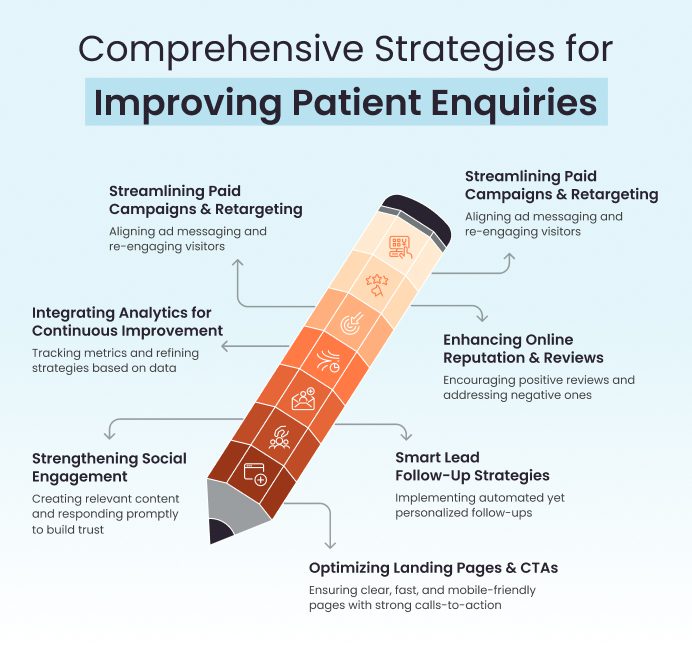
By implementing these recommendations, healthcare brands can turn insights from a growth audit into measurable improvements, recover lost patient enquiries, and create a predictable, high-converting digital funnel.