





Apr 07/2026

Every day, clinics and hospitals work hard to attract patients, deliver quality care, and run efficient operations. Yet, many healthcare leaders find it difficult to clearly understand whether their practices are growing in a healthy and sustainable way.
Rising costs, increasing patient expectations, and digital-first behaviour have changed how people choose healthcare providers. Patients now compare options online, read reviews, and expect smooth booking and communication. As a result, growth has become more complex and more measurable than ever before.
Small declines in inquiries, conversions, or repeat visits often go unnoticed until they begin affecting revenue and reputation. Without regular tracking, these early warning signs are easy to miss.
Patient growth metrics help solve this challenge. They offer clear visibility into how well a clinic attracts new patients, retains existing ones, converts inquiries into visits, and generates long-term value.
In this article, we will explore the four most important patient growth metrics every clinic and hospital leader should monitor weekly and how tracking them consistently can support smarter decisions, stronger performance, and sustainable growth.
Understanding Patient Growth: From Footfall to Long-Term Value
Gone are the days when clinics and hospitals defined growth simply by counting the number of patients entering the doors or appointments scheduled. While that metric still has value, it only tells part of the story. Today, patient growth reflects not just how many people visit, but how effectively a practice attracts the right patients, keeps them engaged, and delivers lasting value over time.
Modern patient growth combines several key dimensions, such as:
- New patient acquisition
- Patient experience
- Trust and loyalty
- Long-term retention and revenue contribution
These metrics are important to consider as appointment counts are limited in insight. They do not reveal whether patients complete their treatment plans, return for follow-ups, or refer others based on positive experiences. Simply, volume does not equal value.
Healthcare leaders today need metrics that show both activity and quality of engagement, because sustainable growth emerges where patient expectations are met, and trust is built.
Research consistently shows that patient experience is closely linked to loyalty and retention. For example:
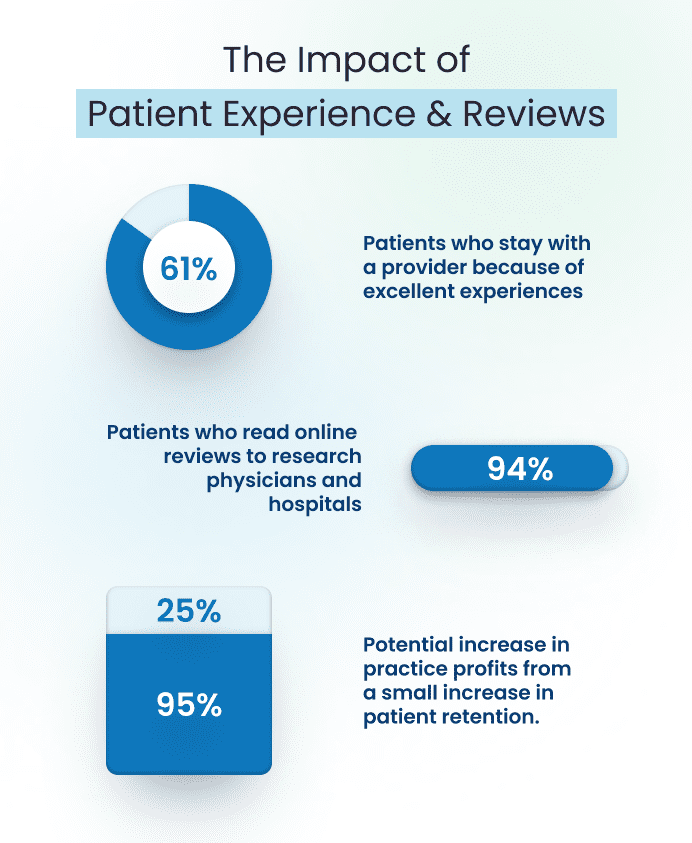
These findings highlight that patient growth is a relationship game.
The Connection Between Experience, Trust, and Retention
Patient experience includes every interaction a person has with a clinic or hospital, and it reflects how supported, informed, and valued patients feel throughout their journey.
The connection is therefore straight and clear:
- Consistently positive experiences help build trust.
- When patients feel heard and respected, they are more likely to follow medical advice, return for future care, and remain loyal to their provider.
- Over time, this trust strengthens long-term relationships.
Because healthcare decisions are deeply personal, trust becomes a key driver of retention. Patients who feel genuinely cared for are more likely to return and recommend the practice to others, turning individual visits into lasting partnerships and sustainable growth.
Identify Growth Gaps That May Be Limiting Your Clinic’s Patient Outcomes
Review Your Marketing PerformanceThe 4 Patient Growth Metrics That Define Sustainable Healthcare Success
Leading clinics and hospitals focus on a small set of meaningful indicators that reflect both operational efficiency and patient engagement. They understand that sustainable growth is built on consistency, transparency, and timely insights.
By tracking these four key metrics in healthcare marketing, they are able to measure outcomes that directly influence patient satisfaction, loyalty, and long-term financial stability.
Metric #1: Patient Acquisition Rate
The Patient Acquisition Rate measures how many first-time patients a clinic or hospital attracts in a given period. It shows how effective marketing, branding, and outreach efforts are in bringing new people into the practice.
This metric matters because sustainable growth depends on a steady inflow of new patients. Even strong retention cannot support long-term expansion if new patient numbers remain low. A declining acquisition rate may indicate reduced visibility or weak engagement, while consistent growth reflects strong market positioning.
New patients usually come from three main sources:
- Digital channels (search engines, websites, social media, and appointment platforms)
- Referrals (patient trust and professional credibility)
- Walk-ins
Together, these sources reveal how visible a clinic is in its market. A healthy acquisition rate suggests that the organization is easy to find, trusted by its community, and competitive in an increasingly digital healthcare environment.
Metric #2: Patient Retention & Repeat Visit Rate
Attracting new patients requires continuous investment in marketing, promotions, and outreach, while returning patients already trust the provider and are more likely to continue their care. As a result, retaining existing patients is often more profitable than acquiring new ones.
Strong retention helps clinics grow more efficiently and reduce overall acquisition costs. High retention is often linked to clear communication, reliable service, minimal waiting time, and consistent quality of care. Online reviews, referrals, and long-term treatment adherence serve as important indicators of patient loyalty.
Repeat visits play a critical role in ensuring long-term revenue stability. Patients who remain engaged over time contribute to predictable income and better utilization of resources. They are also more likely to accept recommended services and refer others, strengthening both clinical outcomes and financial performance.
Metric #3: Appointment Conversion Rate
The Appointment Conversion Rate measures how many patient inquiries actually turn into confirmed appointments. These inquiries may come through phone calls, website forms, social media messages, chat platforms, or walk-ins.
Monitoring this metric helps identify gaps like missed calls, delayed responses, complicated booking processes, unclear pricing, or a lack of follow-up in the patient journey. This can discourage patients from moving forward. Even small inefficiencies at these stages can lead to lost opportunities and reduced growth.
Operational efficiency directly affects conversion performance, too. Clinics with well-trained front-desk teams, integrated booking systems, and streamlined workflows are better equipped to manage inquiries and reduce drop-offs. By improving internal processes and removing friction points, healthcare organizations can increase appointment conversions and support steady patient growth.
Metric #4: Average Revenue per Patient (ARPP)
Average Revenue per Patient (ARPP) measures how much revenue a clinic or hospital generates from each patient over a specific period. It reflects the overall financial value of patient relationships and helps leaders understand how effectively services are being delivered and utilized.
Tracking ARPP is important because it reveals whether growth is driven by meaningful care delivery or by short-term volume. A low ARPP may indicate:
- Underutilization of available services
- Missed follow-ups or incomplete treatment plans
- Limited patient awareness of offered care options
In contrast, a healthy ARPP suggests that patients are receiving comprehensive and well-coordinated care.
This metric also helps in understanding treatment mix and service utilization.
By analysing ARPP, healthcare leaders can identify:
- Which services contribute most to revenue
- How frequently do patients use different treatments
- Where resource allocation can be improved
These insights support better planning of staff, infrastructure, and service development.
Together, these four metrics provide a comprehensive view of patient growth, covering acquisition, engagement, conversion, and long-term value.
Discover How Your Clinic Performs Across Key Patient Growth Metrics
Get a Growth Report NowHow Data, Technology, and AI Enable Smarter Weekly Tracking
Clinics and hospitals today generate large volumes of information through appointment systems, billing platforms, patient records, and digital marketing channels. When analyzed effectively, this data provides valuable insights into patient behaviour, operational efficiency, and growth trends.
- Advanced analytics tools and AI-powered platforms help automate the process of collecting, organizing, and interpreting this information. This helps leaders to access real-time dashboards that track key metrics such as new patient acquisition, retention, conversions, and revenue per patient.
- Technology also reduces the risk of manual errors and data gaps. Spreadsheets, paper records, and disconnected systems often lead to inaccurate reporting, delayed analysis, and incomplete visibility. These blind spots can prevent leaders from identifying emerging issues or opportunities in time.
By integrating data systems and using intelligent analytics tools, clinics can eliminate these inefficiencies. AI-driven platforms help highlight patterns, flag irregularities, and predict trends, allowing healthcare organizations to move from reactive management to proactive planning. This improves accuracy, transparency, and accountability across departments.
Ultimately, data, technology, and AI transform weekly tracking from a time-consuming task into a strategic advantage, supporting consistent growth, better patient experiences, and stronger operational control.
Common Mistakes Clinics Make When Tracking Growth Metrics
Tracking patient growth is essential for improving performance, but many clinics and hospitals struggle to use data effectively. In many cases, growth is monitored irregularly, data is viewed in isolation, or insights are not translated into action. As a result, valuable information is overlooked, and opportunities for improvement are missed.
One of the most common challenges is that healthcare leaders often focus on collecting data, but not on understanding what it truly represents. Without proper structure and consistency, tracking efforts can become fragmented and ineffective. To build a reliable growth system, it is important to recognize and avoid the following common mistakes.
Some other common mistakes in tracking growth metrics are:
Relying on Monthly or Quarterly Reviews:
Reviewing performance only once every few months delays problem detection. By the time issues appear in reports, patient drop-offs, low conversions, or declining engagement may already have impacted revenue and reputation.
Ignoring Data Integration:
Many clinics use separate systems for appointments, billing, marketing, and patient records. When these systems are not connected, leaders receive incomplete or inconsistent information. This lack of integration creates blind spots and makes accurate analysis difficult.
Making Decisions Without Context:
Looking at numbers without understanding the underlying reasons can lead to incorrect conclusions. For example, a decline in appointments may be linked to staff shortages, seasonal trends, or technical issues rather than weak marketing. Context is essential for meaningful interpretation.
Focusing Only on Surface-Level Metrics:
Some organizations track only basic indicators such as total appointments or revenue. While useful, these metrics do not explain patient behaviour, satisfaction, or long-term value. Ignoring deeper insights limits strategic planning.
Inconsistent Data Monitoring:
Irregular tracking leads to gaps in performance visibility. Without consistent review schedules and standardized reporting methods, trends become harder to identify and compare over time.
Lack of Team Alignment:
When marketing, operations, and clinical teams work with separate data sets, growth efforts become disconnected. Effective tracking requires shared visibility and collaboration across departments.
By avoiding these common mistakes and adopting a structured, integrated approach to data analysis, clinics can transform growth tracking into a powerful management tool. This ensures that insights lead to informed decisions, stronger performance, and sustainable development.
3 Easy Steps to Build a Weekly Growth Review System
Tracking patient growth metrics is most effective when it becomes a consistent part of the management routine. A structured weekly review system helps transform raw numbers into meaningful insights and actionable strategies. By reviewing key metrics every week, healthcare leaders can identify trends early, address issues quickly, and maintain steady progress.
Building an effective review system does not require complex tools or extensive resources. Follow the simple 3-step process to create a simple yet powerful framework that supports continuous improvement and long-term growth.
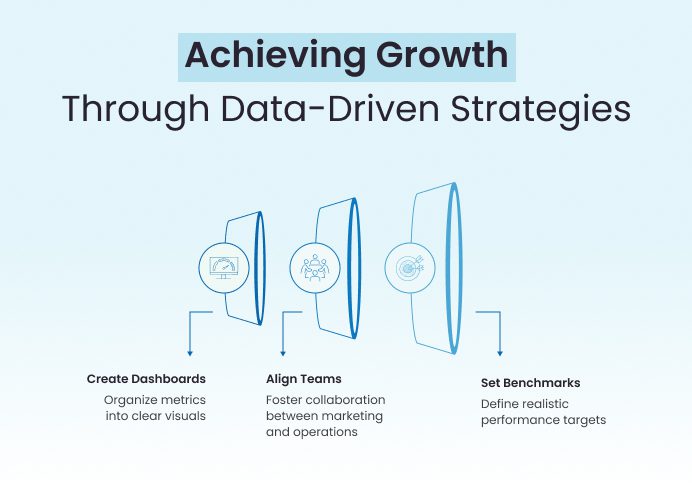
By following these three steps, healthcare organizations can turn weekly growth reviews into a structured management practice. This approach promotes accountability, improves coordination, and ensures that data-driven insights consistently guide strategic decisions.
Conclusion
Sustainable healthcare growth is built on understanding and managing the right performance indicators. As healthcare continues to evolve, data-driven management will become increasingly important. Advanced analytics, integrated platforms, and AI-powered tools are shaping the future of healthcare growth by enabling real-time insights, predictive planning, and improved operational efficiency.
To support this transition, MedGrowthEngine.ai helps healthcare organizations unlock the full potential of their data through smarter growth tools and performance-focused solutions. By combining technology, analytics, and industry expertise, we enable clinics and hospitals to gain deeper visibility into their marketing effectiveness and patient journey.
If you would like to understand how your practice is performing and where improvement opportunities exist, our team offers comprehensive marketing and growth audits. These audits provide clear insights into your key metrics, conversion processes, and growth potential. Connect with MedGrowthEngine.ai today to explore how data-driven strategies can strengthen your healthcare growth system and support long-term success.
Frequently Asked Questions
The most important patient growth metrics include new patient acquisition rate, patient retention rate, appointment conversion rate, and average revenue per patient. Together, these metrics help clinics measure marketing effectiveness, patient loyalty, operational efficiency, and financial sustainability.
Clinics can track patient growth metrics weekly by using integrated analytics dashboards, CRM systems, and automated reporting tools that collect data from booking, billing, and marketing platforms in real time.
Patient retention is more profitable because returning patients require lower marketing investment, are more likely to follow treatment plans, and contribute to stable long-term revenue through repeat visits and referrals.
A higher appointment conversion rate increases the number of confirmed visits from inquiries, reduces lead wastage, and improves revenue predictability by maximizing the value of existing marketing efforts.
Healthcare organizations can use data and AI tools to automate reporting, identify growth trends, reduce operational inefficiencies, and generate predictive insights that support smarter decision-making and sustainable growth.